
Showing 379–387 of 1403 resultsSorted by latest
-

WWII Imperial Japanese Navy – Type 3 KAI – Tokyo Aero Indicator Co – Mitsubishi G4M Type 1 Bomber Betty – Very Rare
This is a WWII-era direct reading, reflector, magnetic compass,Type 2 or 3 KAI , made by Tokyo Aero Indicator Co, as used in aircraft of the Japanese Navy. According to the online Funatsu Aviation Instruments Museum, this compass was used in the following aircraft: Mitsubishi G4M Type 1 Bomber Betty Nakajima B6N Tenzan Torpedo Bomber Kate Type94 Recon Kawanishi E7K Type 95 Model 2 Recon Nakajima C6N Saiun Myrt The box is period, along with all the extras – we have not had anything in this condition as usually these are taken from downed or crashed aircraft. This example is in the box like it came out of the factory.
-

WWII British Royal Air Force Navigational Compass – Spitfire – Hurricane – Mosquito – Beaufighter – Crown Marked AM 6A/726 –
The Type P8 Navigational Compass, Ref 6A/0726, was used across numerous aircraft of the British Royal Air Force during WWII, including Spitfire, Hurricane, Mosquito, and Beaufighter. Original
-

WWI US AEF – Chaplain LeVeer – Table Service Crusifix and Wooden Box – 26th Division Yankee – Original Rare (Offer Accepted)
Chaplain Arthur Joseph LaVeer was born along the Connecticut River in the Northeast Kingdom (a regional name) town of Bloomfield, Vermont on February 3rd, 1886. Commissioned as a 1st Lt. on August 22nd, 1918, LeVeer was quickly sent overseas to serve as a chaplain with the 102nd Infantry Regiment of the 26th “Yankee Division.”Father LeVeer served at St. Norbert’s Church in Hardwick for the remainder of his life. Photo – Found on the web, shows LeVeer in uniform and later in life. (Last 4 photos are reference only) Incredibly rare items If your interested in learning more about this Chaplain I was able to find very good info from this website; Thanks to Mr Gauthier. https://portraitofwar.com/2017/02/28/wwi-26th-division-chaplain-photo-bloomfield-vt-native-arthur-leveer-in-france-1918/
-
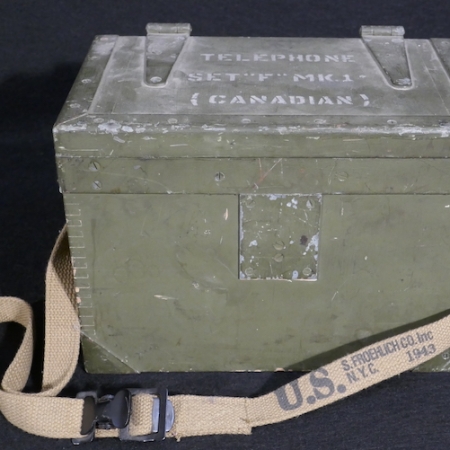
WWII Canadian Army – Telephone Set F MK.1 – 1943/1944 – Original
Nicely marked Canadian WW2 gear is not the easiest to find.
-
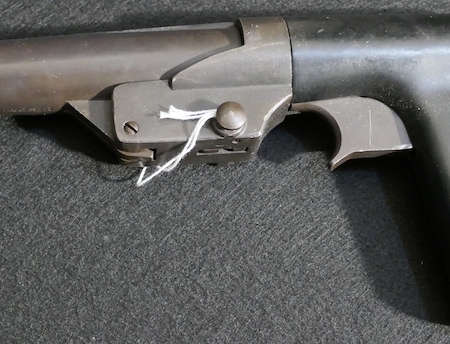
WWII US Navy Signal Pistol 1943 Dated – Signal Pistol Mark 5 R.F. Sedgley Inc 1943 – Original
Original Signals Pistol 1943 Dated US Sales only
-

WWI WWII US Marine Corps Sniper Scope – USMC M1903 – Winchester A5 Sniper Scope – Original
Here we have a Winchester A5 Sniper Scope . Photos in use are only for reference. WWI & WWII with the USMC. Optic is a little dusty but the cross hairs are still complete.
-

-

-

Civil War Union Sharpshooter – William H H Mallory – Army of the Potomac – Battle of Fredericksburg – Rappahannock -Wilderness – Spotsylvania – North Anna – Cold Harbour – Peebles Farm – Museum Grade Archive
An incredible US Civil War Grouping to : William H H Mallory Enlistment Age 21 Birth Date abt 1840 Enlistment Date 16 Apr 1861 Enlistment Rank Private Muster Date 22 Apr 1861 Muster Place Massachusetts Muster Company K Muster Regiment 6th Infantry Muster Regiment Type Infantry Muster Information Enlisted Rank Change Date 30 Sep 1862 Rank Change Rank Corpl Muster Out Date 2 Aug 1861 Muster Out Place Boston, Massachusetts Muster Out Information Mustered Out Side of War Union Survived War? Yes Residence Place Cambridgeport, Massachusetts Occupation Machinist Then fought with on reenlistment: 2nd Company Massachusetts Sharpshooters was a company of sharpshooters that served in the Union Army during the American Civil War. It was also known as the 2nd Andrew’s Sharpshooters after the governor of Massachusetts, John Albion Andrew. The company was attached to the 22nd Massachusetts Infantry at the beginning of their term and operated together with that unit for its entire history of service. The 2nd Massachusetts Sharpshooters became part of the Army of the Potomac and saw combat in some of the largest battles of the war. The 22nd Regiment Massachusetts Volunteer Infantry was an infantry regiment in the Union army during the American Civil War. The 22nd Massachusetts was organized by Senator Henry Wilson (future Vice-President during the Ulysses Grant administration) and was therefore known as “Henry Wilson’s Regiment.” It was formed in Boston, Massachusetts, and established on September 28, 1861, for a term of three years. Arriving in Washington in October 1861, the regiment spent the following winter in camp at Hall’s Hill, near Arlington in Virginia. It became part of the Army of the Potomac, with which it would be associated for its entire term of service. The regiment saw its first action during the siege of Yorktown in April 1862. It was involved in the Peninsular campaign, particularly the Battle of Gaines’ Mill during which it suffered its worst casualties (numerically) of the war.[2] Their worst casualties in terms of percentages took place during the Battle of Gettysburg (60 percent). The 22nd Massachusetts was present for virtually all of the major battles in which the Army of the Potomac fought, including the Second Battle of Bull Run, the Battle of Antietam, the Battle of Fredericksburg, the Battle of Chancellorsville, the Battle of Gettysburg and Lieutenant General Ulysses Grant’s Overland campaign. The 22nd was especially proficient in skirmish drill and was frequently deployed in that capacity throughout the war. During the siege of Petersburg in October 1864, the 22nd Massachusetts was removed from the lines and sent home to Massachusetts. Of the 1,100 who initially belonged to the unit, only 125 returned at the end of their three years of service. Of these losses, roughly 300 were killed in action or died from wounds received in action, approximately 500 were discharged due to wounds or disease, and approximately 175 were lost or discharged due to capture, resignation, or desertion Major General George B. McClellan, commanding the Army of the Potomac, determined to take the Confederate capital of Richmond via the Virginia Peninsula. This unexpected move would, in theory, allow McClellan’s army to move quickly up the peninsula rather than fighting through Northern Virginia. During March 1862, the Army of the Potomac was gradually transferred by water to Fortress Monroe at the end of the Virginia Peninsula. On March 10, 1862, the 22nd left their winter camp and were shipped to Fortress Monroe. By April 4, the regiment began to advance, along with many other elements of the Army of the Potomac, up the peninsula. Siege of Yorktown As Union forces approached Yorktown, Virginia they encountered defensive lines established by Confederate Major General John B. Magruder. Initially, Magruder’s forces numbered only 11,000 with McClellan’s numbering 53,000. McClellan also had the rest of the Army of the Potomac en route and Union troops outside of Yorktown would soon number more than 100,000. Despite this, McClellan believed he faced a much larger force and settled in for a month-long siege of Yorktown The 22nd Massachusetts saw their first action of the war near Yorktown on April 5, 1862, as the regiment was ordered to probe the Confederate lines. During the action, a portion of the regiment deployed as skirmishers under fire with great precision. The 22nd’s reputation for expertise at skirmish drill would continue throughout the war and the regiment would frequently be used in this capacity. Over the course of the month-long siege, the 22nd was encamped near Wormley Creek approximately 2 miles (3.2 km) southeast of Yorktown, frequently forming up at a moment’s notice in expectation of an attack. On May 4, the Confederates evacuated their lines, retreating towards Richmond. The 22nd was on picket duty when rumors of the evacuation began to circulate. Colonel Gove determined to investigate and advanced the 22nd towards the Confederate trenches. According to the regimental historian, Gove was the first Union soldier to mount the Confederate works and the 22nd’s flag was the first planted on the ramparts outside of Yorktown. Over the next three weeks, McClellan pushed his army northwest up the Peninsula towards Richmond. The 22nd traveled by steamship and by foot, eventually reaching Gaines’ Mill, Virginia where they set up camp on May 26, 1862, about 8 miles (13 km) northeast of Richmond. During this movement, the V Corps of the Union army was formed and the 22nd became part of the 1st Brigade, 1st Division, V Corps. The regiment would remain a part of the V Corps for the duration of their service. Battle of Gaines’ Mill After seeing minor action in the Battle of Hanover Court House on May 27, the 22nd remained in camp at Gaines’ Mill for nearly a month as McClellan positioned his army for an assault on Richmond. The men of the 22nd could see the steeples of Richmond from their camp. By this time, the regiment had been reduced to roughly 750 men due to sickness over the course of the campaign and minor casualties in action….


