
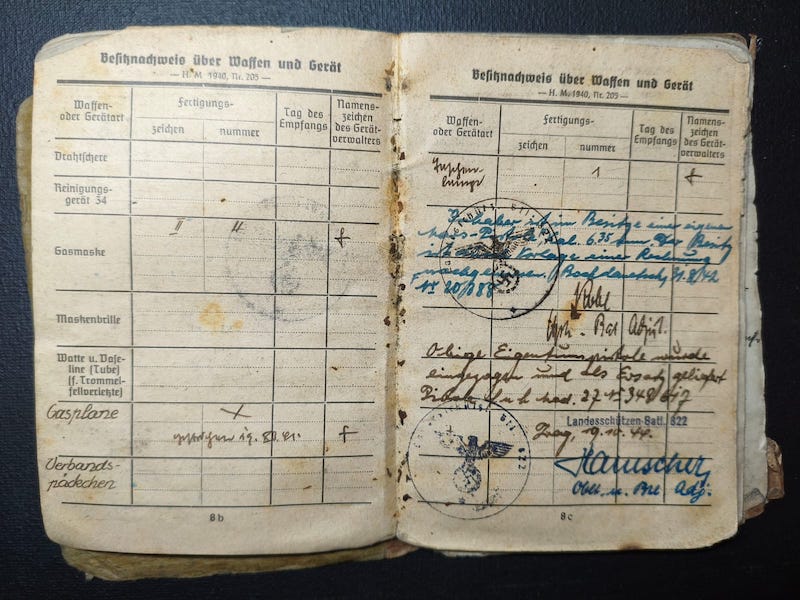
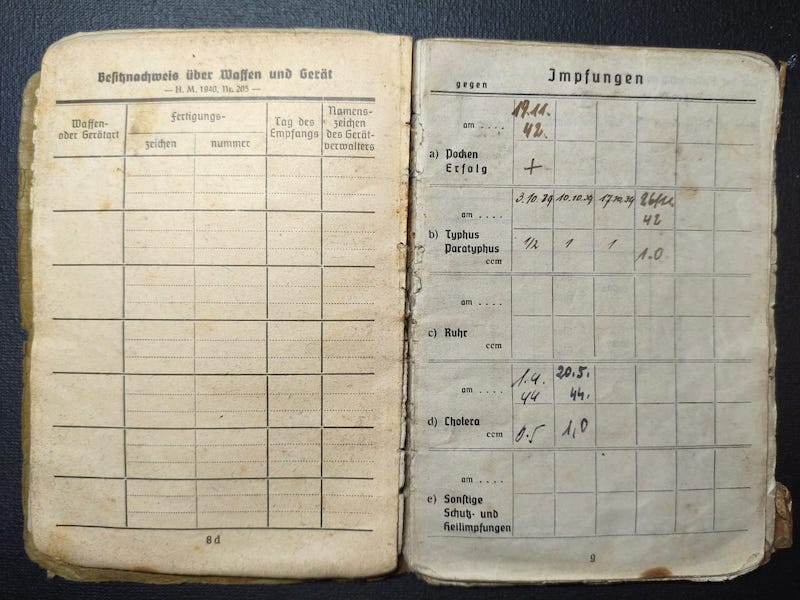
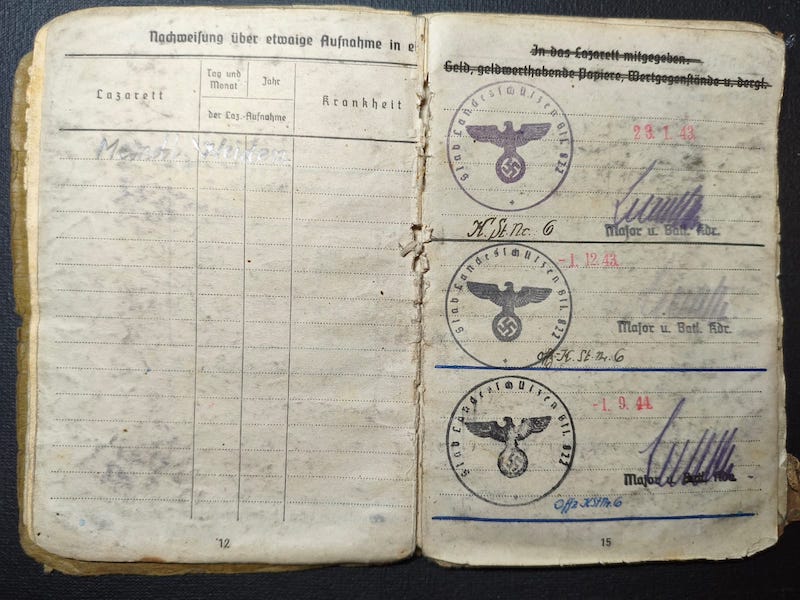
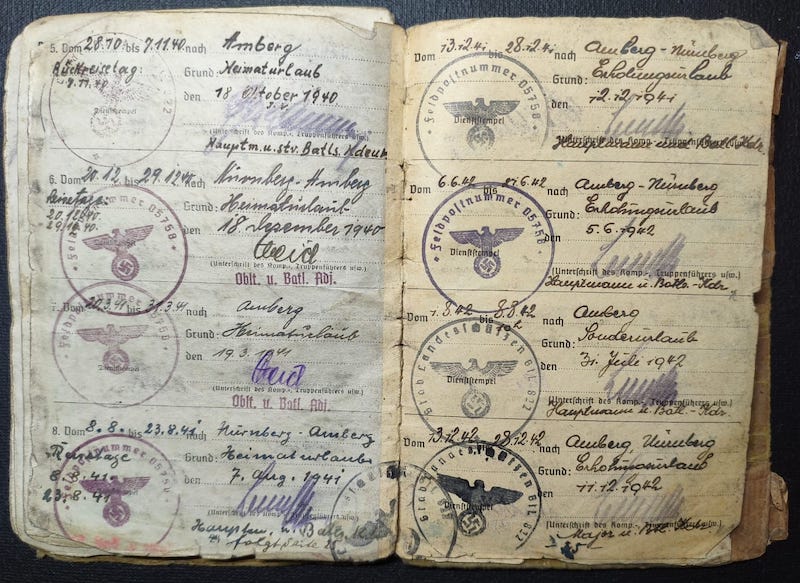
Original WWII German Wehrmacht Soldbuch – Stabsintendant Meusel – Landeschutzen Batl 822 (Prag) – POW Diary – Fully Translated – Incredible Story – Rare
Description
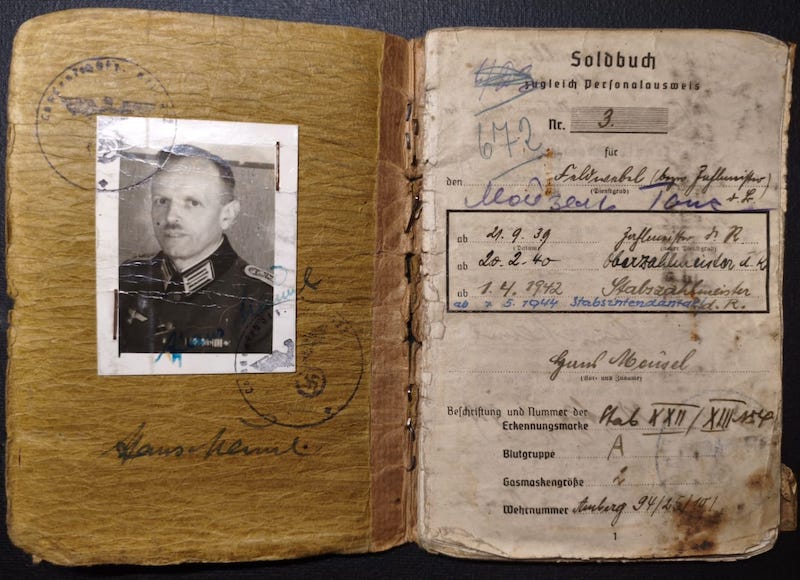
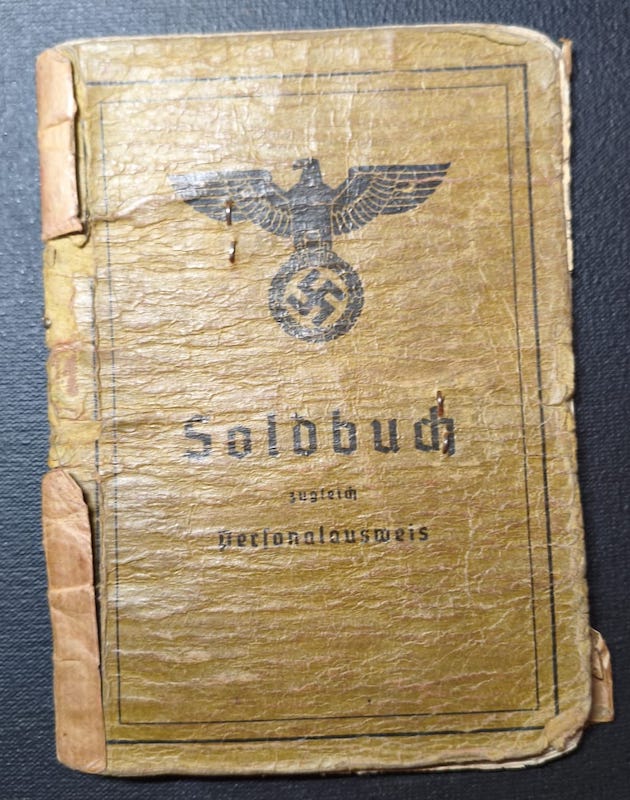
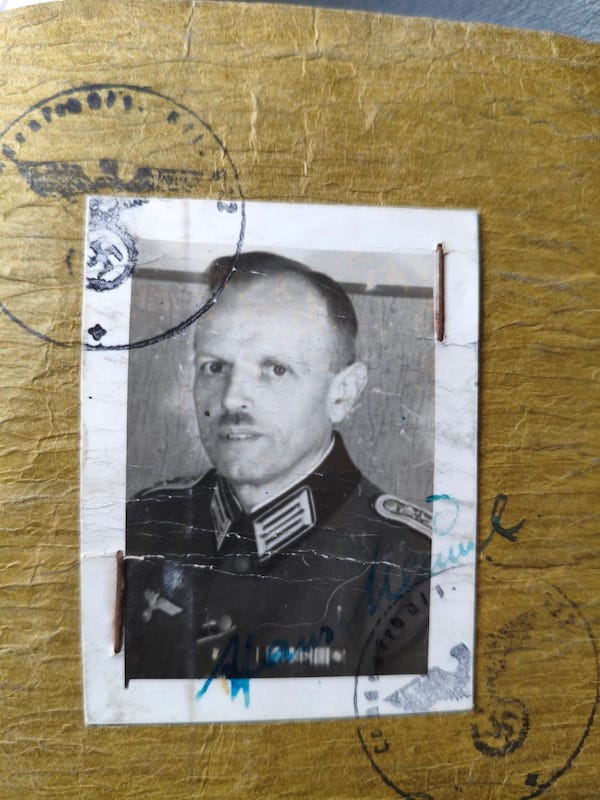
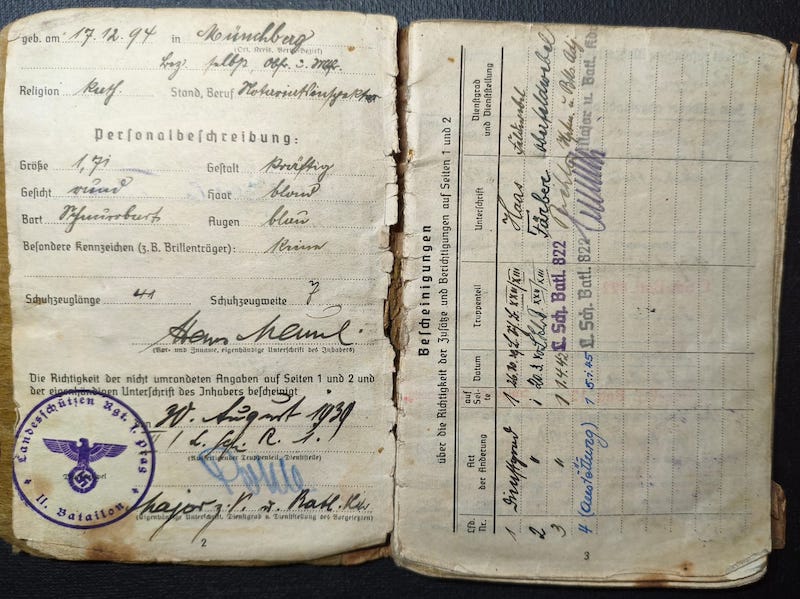
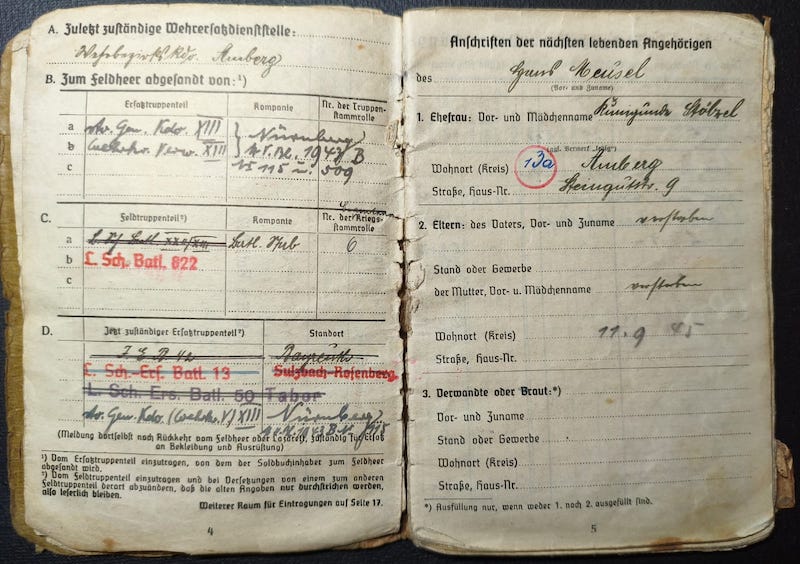
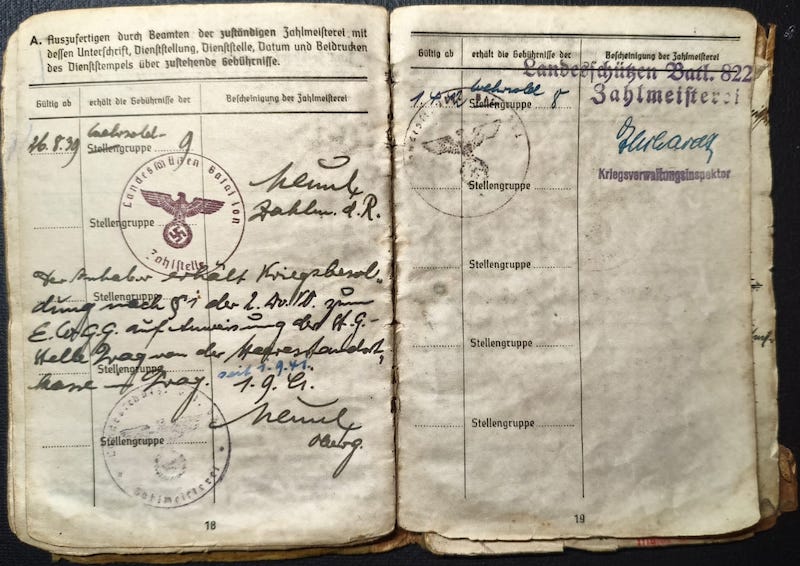
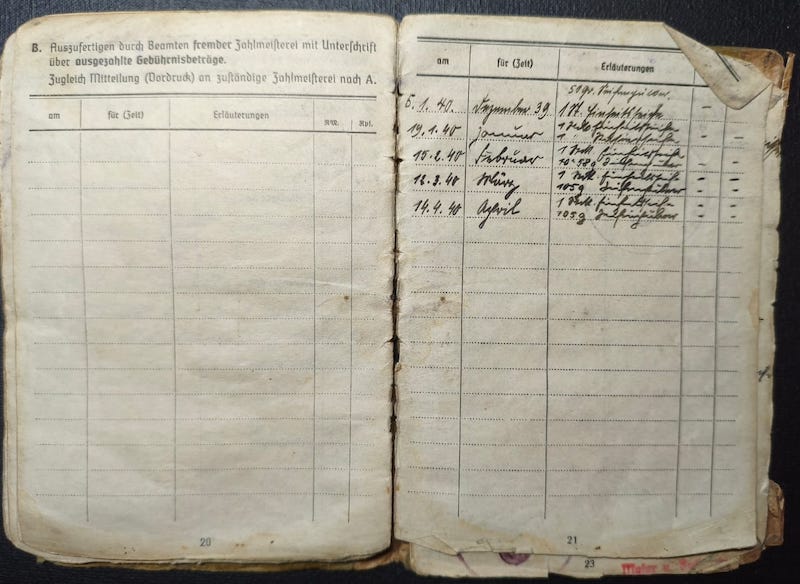
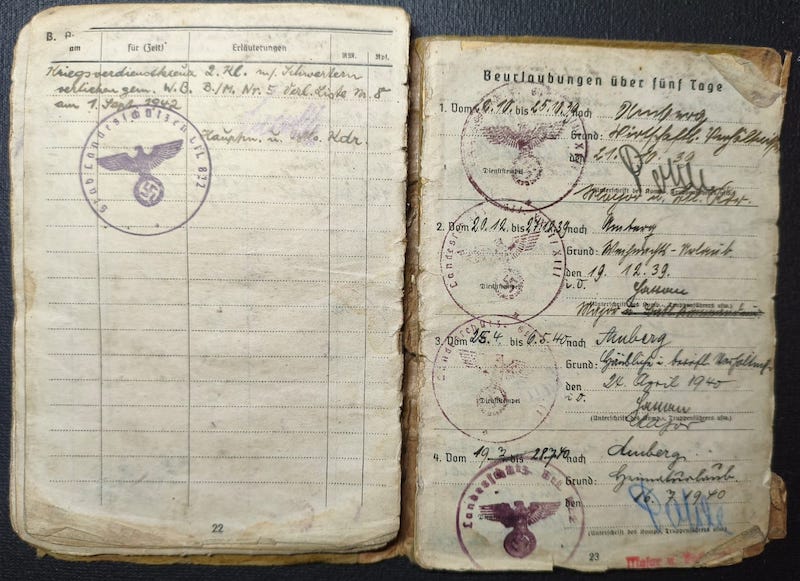
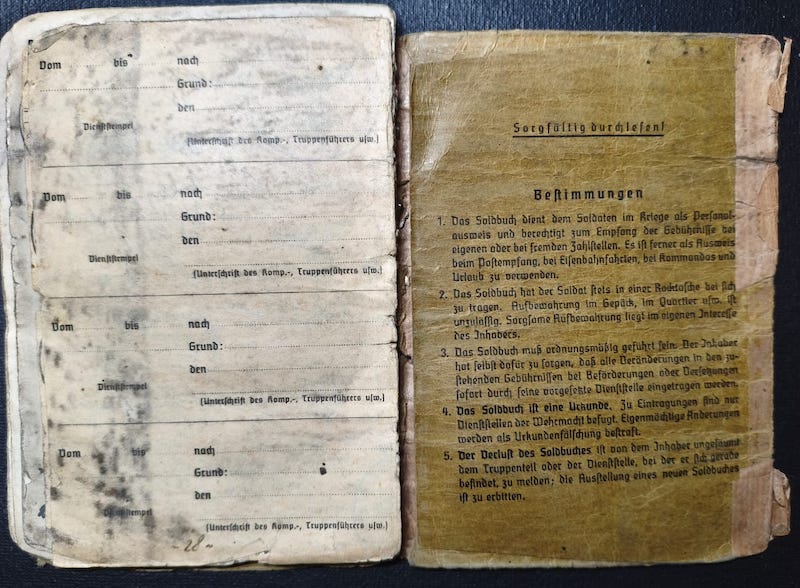
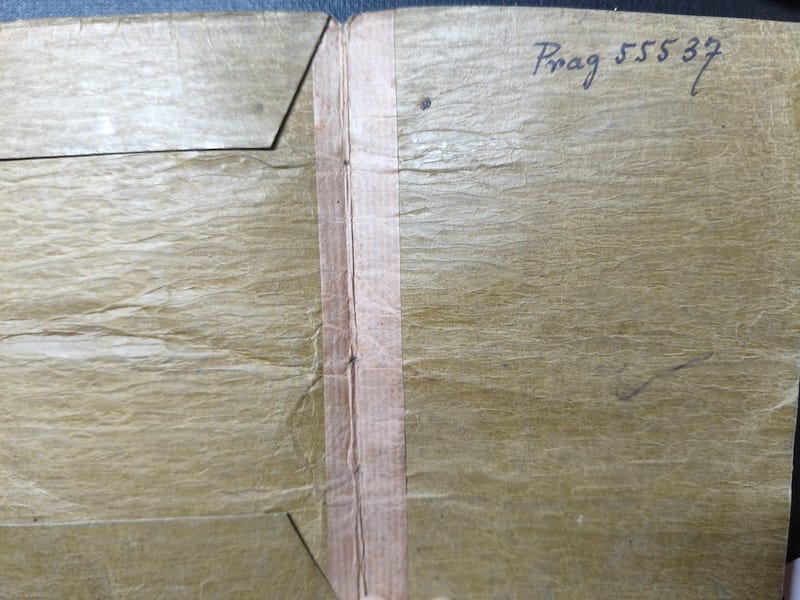
Soldbuch issued in 1939 to Hans Meusel.
By: Landeschützen Regiment 1 – Prag
The Landesschützen-Regiment 1 was formed on 29 August 1939 in Prague, in the Protectorate of Bohemia and Moravia. The regiment was organized into a staff and 3 battalions. The regiment was created from Landesschützeneinheiten that had been transferred to the Protectorate of Bohemia and Moravia during mobilization.
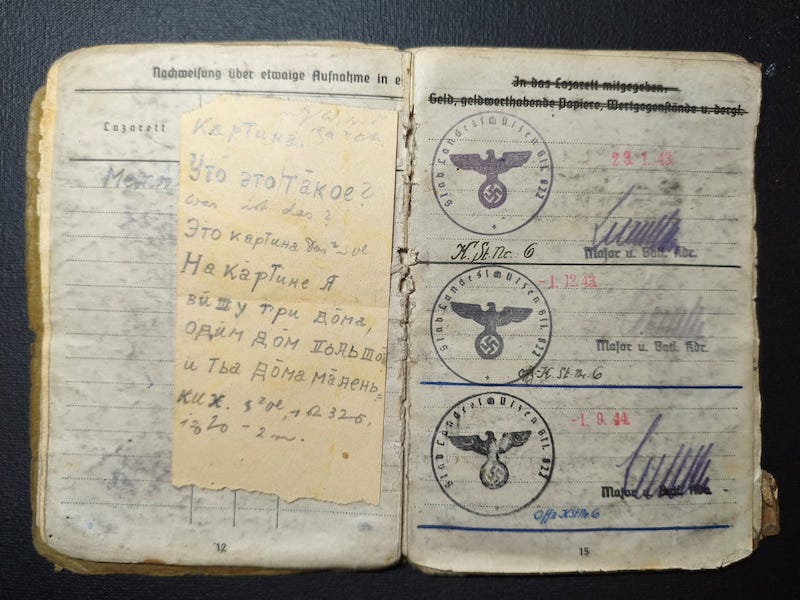
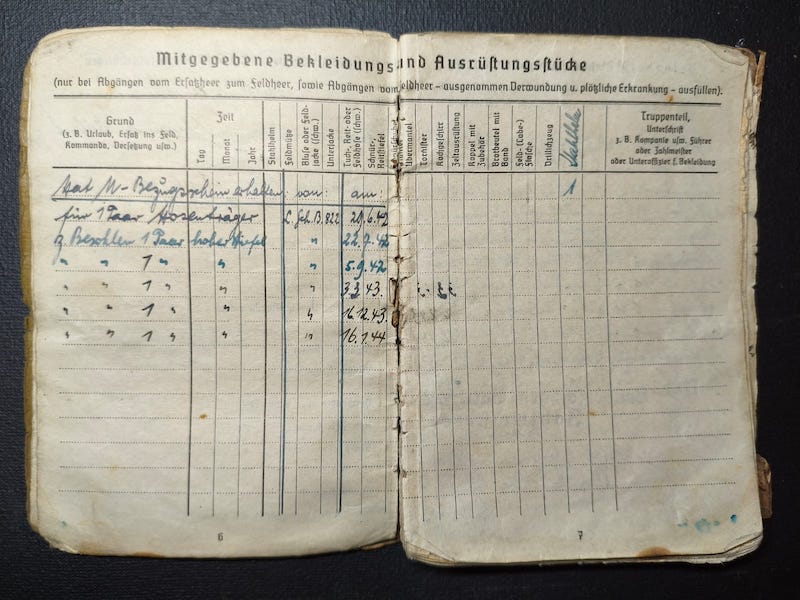
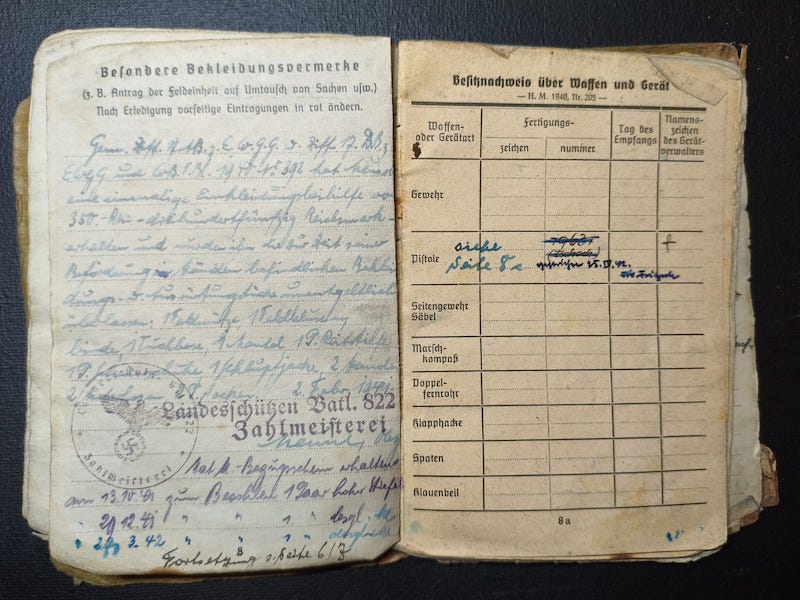
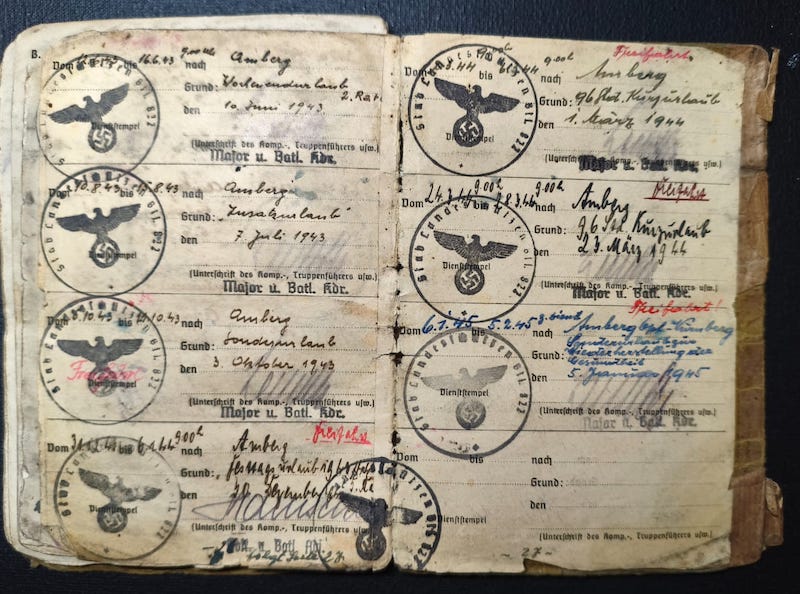
He was assigned to Landesschützen Batl 822 (Prag)
Already on 29 August 1939, the battalion was transferred to the Protectorate of Bohemia and Moravia. There, the battalion was incorporated as II. Bataillon into Landesschützen-Regiment 1 and was thus subordinated to Landesschützen-Kommandeur I. On 9 September 1939, the battalion was renamed Landesschützen-Bataillon XXII/XIII. After the redesignation of the higher command, the battalion was subordinated to Division z.b.V. 539 as of 15 October 1939. It continued to be employed in the Prague area. On 1 April 1940, the battalion was renamed Landesschützen-Bataillon 822 in the Protectorate of Bohemia and Moravia. The battalion remained under Division z.b.V. 539. It was then stationed in Bochdanetsch near Pardubitz, also in the Protectorate of Bohemia and Moravia. On 11 September 1943, the battalion was reorganized into 5 companies. It was now structured into a 1st and 2nd Radfahr-Kompanie, a 3rd Schützen-Kompanie, a 4th schwere Kompanie, and a 5th Pionier-Kompanie. At the beginning of 1945, the battalion was mobilized with 4 companies.
Capture – POW Camps – Return Home – Translated
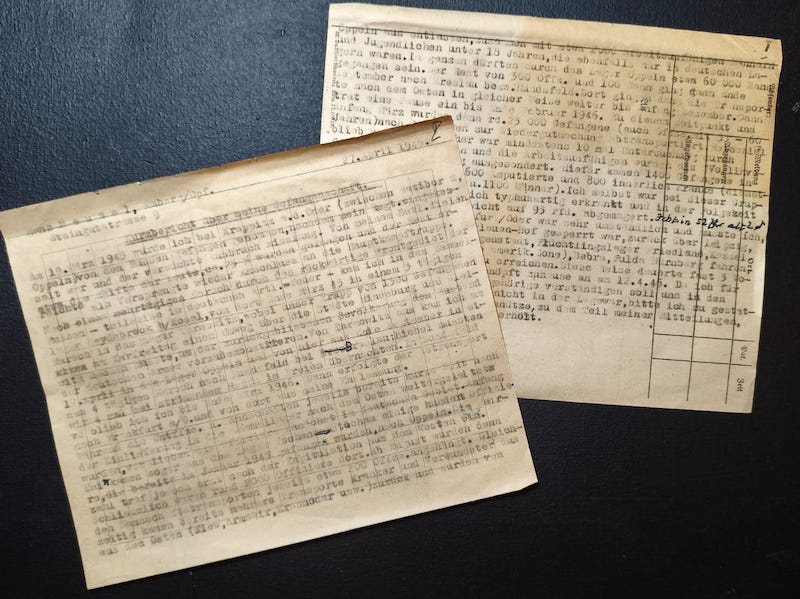
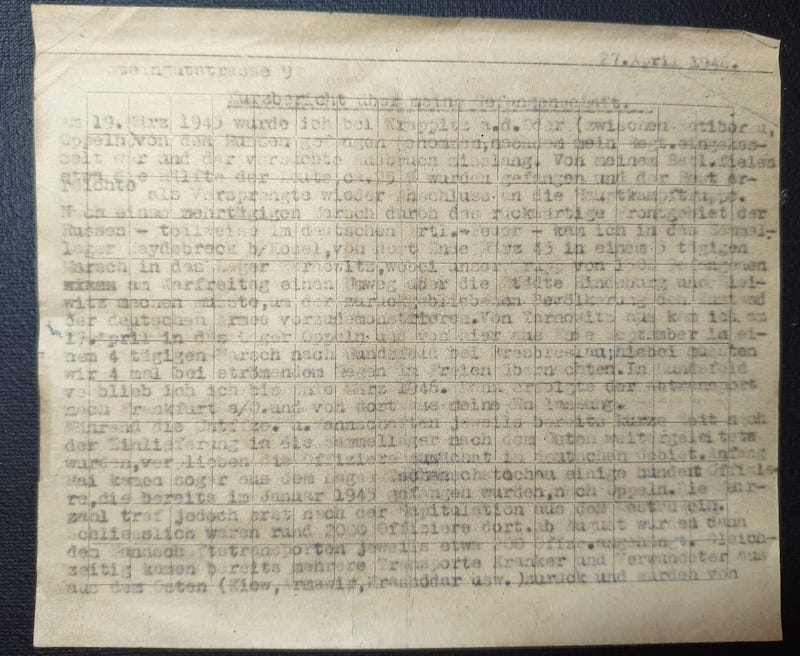
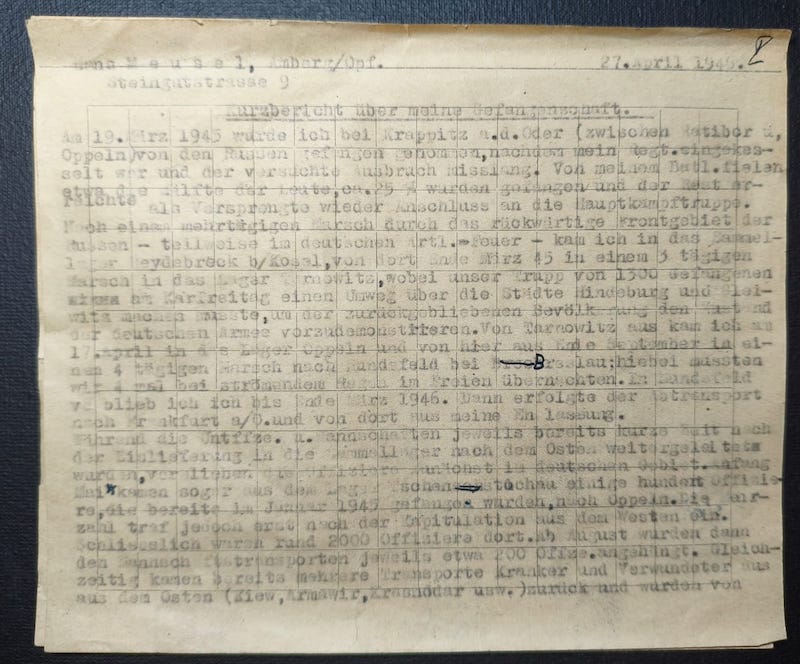
Short Report about my Captivity
On 19 March 1945, I was captured by the Russians near Krappitz an der Oder, between Ratibor and Oppeln, after my regiment was encircled and the attempted breakout failed. From my battalion, about one-third of the men are missing; about 25% were captured, and the rest, as stragglers, managed to rejoin the main combat troops.
After a march of several days through the Russian rear area, partly under German artillery fire, I was taken to the collection camp Heidebeck bei Kossel. From there, at the end of March 1945, we went on a three-day march to the camp Tarnowitz, where our group of 1,300 prisoners on Good Friday had to make a detour through the towns of Hindenburg and Gleiwitz to demonstrate to the remaining population the condition of the German army.
From Tarnowitz, on 17 April, I was sent to the camp Oppeln, and from there at the end of September on a four-day march to Hundsfeld bei Breslau; along the way we had to sleep four times in the open during pouring rain. I remained in Hundsfeld until the end of March 1946. Then came the emergency transport to Frankfurt an der Oder, and from there my release.
While the Unteroffiziere and Mannschaften were already released a short time after May, several hundred officers—who had already been captured in January 1945—came to Oppeln from the camp Tschenstochau. However, the majority only arrived after the capitulation, from the West. In the end, about 2,000 Offiziere were there. From August onwards, prisoner transports of enlisted men were each accompanied by about 200 Officers. At the same time, several transports of sick and wounded returned from the East (Kyiv, Armawir, Krasnodar, etc.) and were released from Oppeln, with the exception of about 2,000 men unfit for service and youths under 18 years, who likewise remained only in German camps.
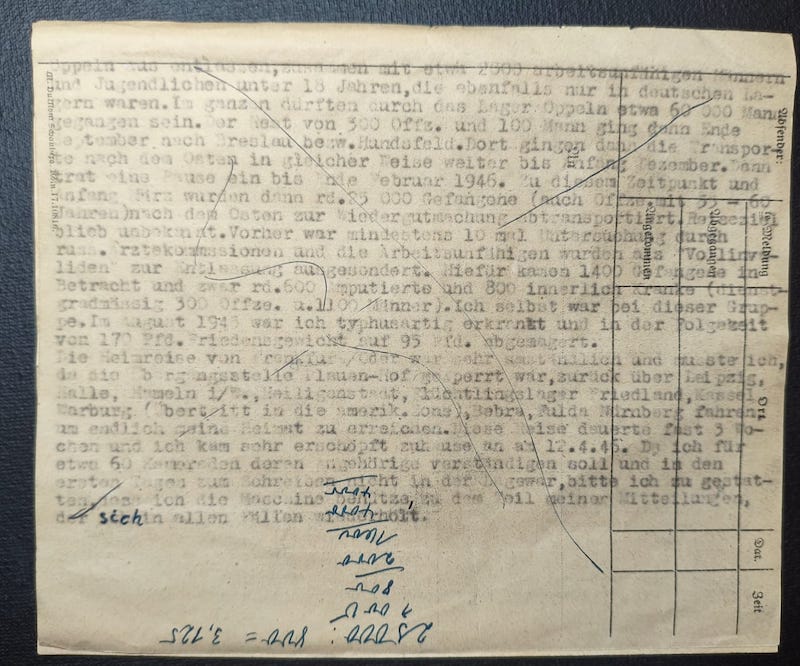
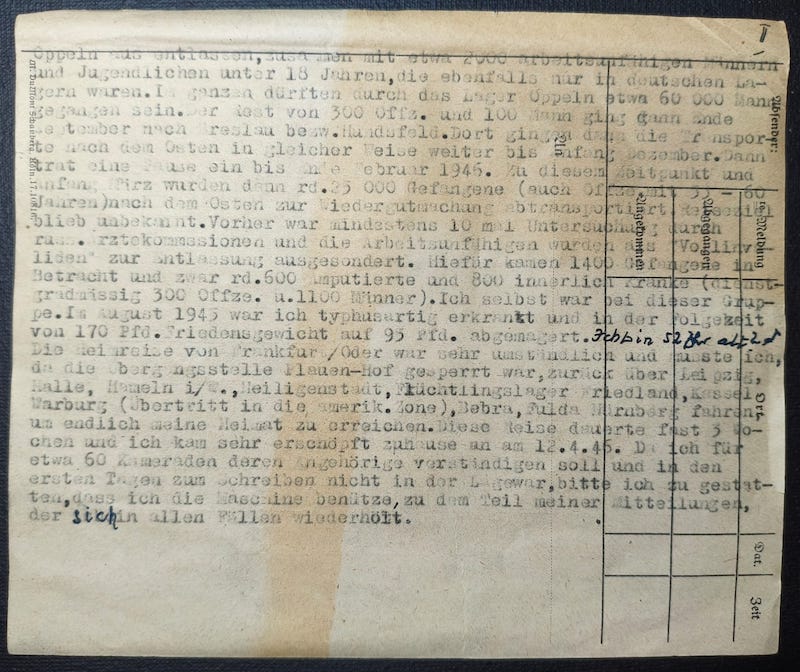
In total, about 60,000 men are thought to have passed through the camp at Oppeln. The remainder, about 300 Officers and 100 men, were then transported further east, moving at the end of September to Breslau, especially Hundsfeld. From there, transports continued to the East in the same way until the beginning of December. Then there was a pause until the end of February 1946. At that time, and at the beginning of March, about 25,000 prisoners (including Officers aged 33–60) were transported eastwards for “reparations work.” Their destination remained unknown.
Before this, there had been at least 10 medical examinations by Russian commissions, and those unable to work—classified as permanently disabled—were selected for release. About 1,400 prisoners were considered for this, namely around 600 amputees and 800 with internal illnesses (by rank: about 300 Officers and 1,100 men). I myself was among this group. In August 1945, I fell ill with typhus-like symptoms and during this time my weight dropped from 170 pounds to 95 pounds. I am 52 years old.
The journey home from Frankfurt/Oder was very complicated, and since the crossing point at Plauen Hof was closed, I had to travel back via Leipzig, Halle, Tannroda, Jena, Hameln, Hellingsstadt, Flüchtlingslager Friedland, Kassel, Warburg (crossing into the American zone), Bebra, Fulda, Nürnberg, in order finally to reach my homeland.
This journey lasted almost three weeks, and I arrived home very exhausted on 12 April 1946. Since I was supposed to notify the relatives of about 60 comrades, and in the first days was not able to write, I ask permission to use the typewriter in order to record part of my communications, which in all cases is again confirmed.
.


