
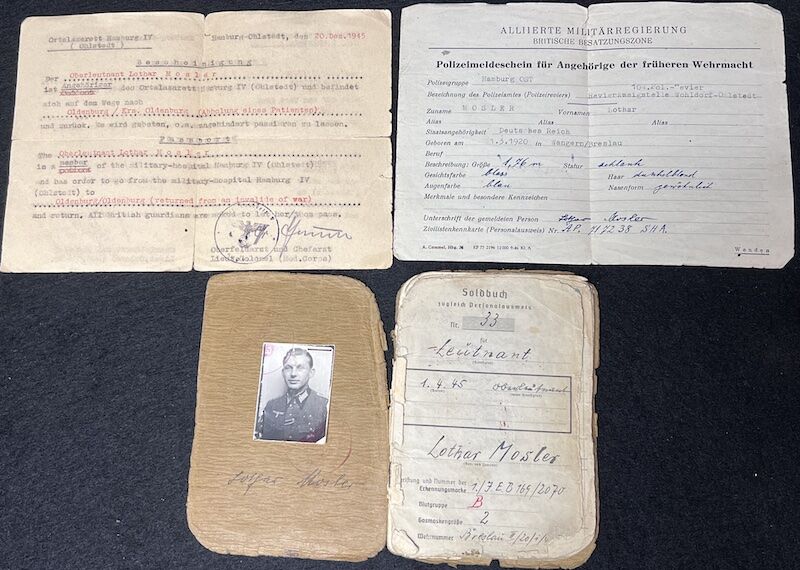
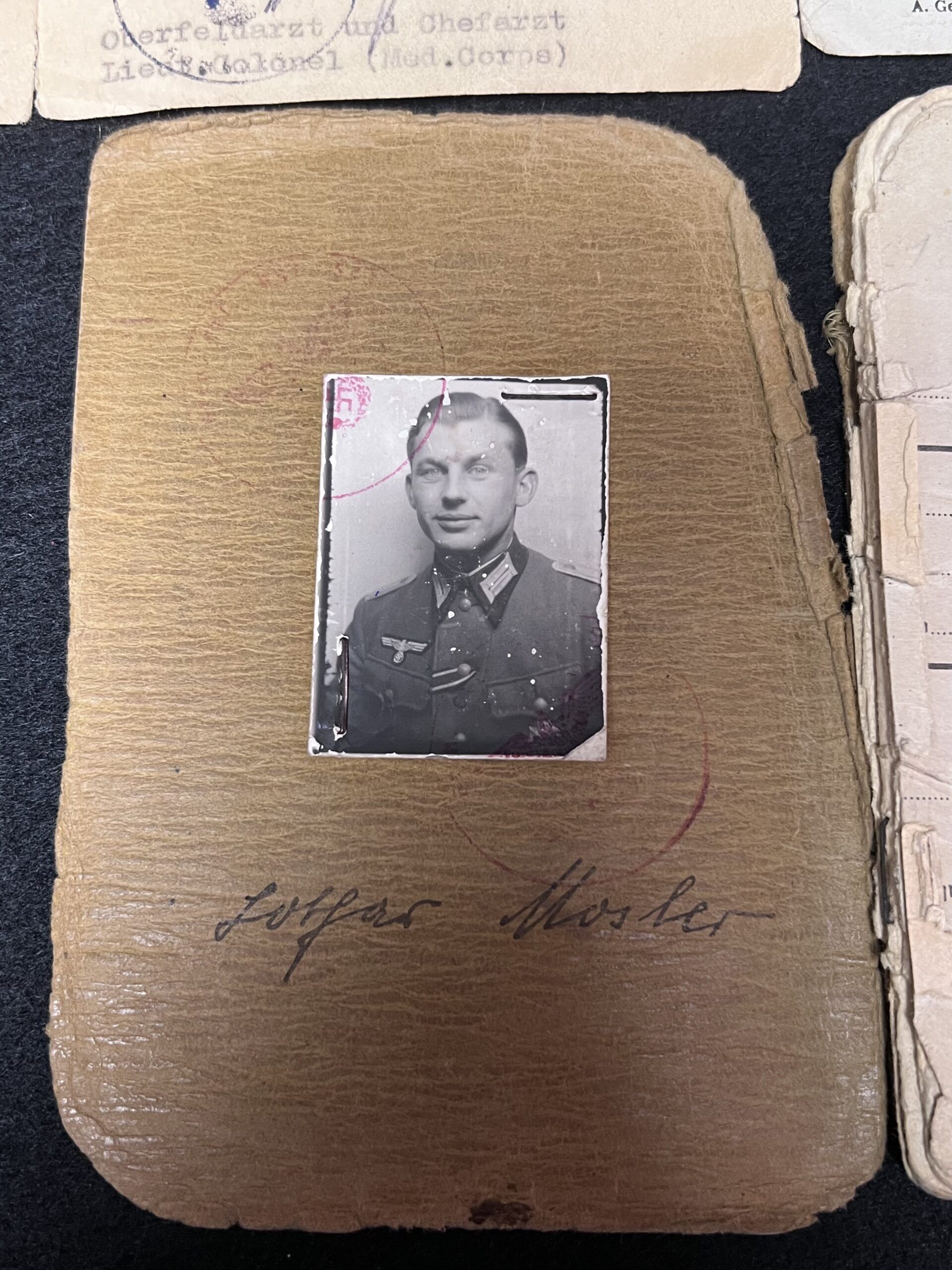
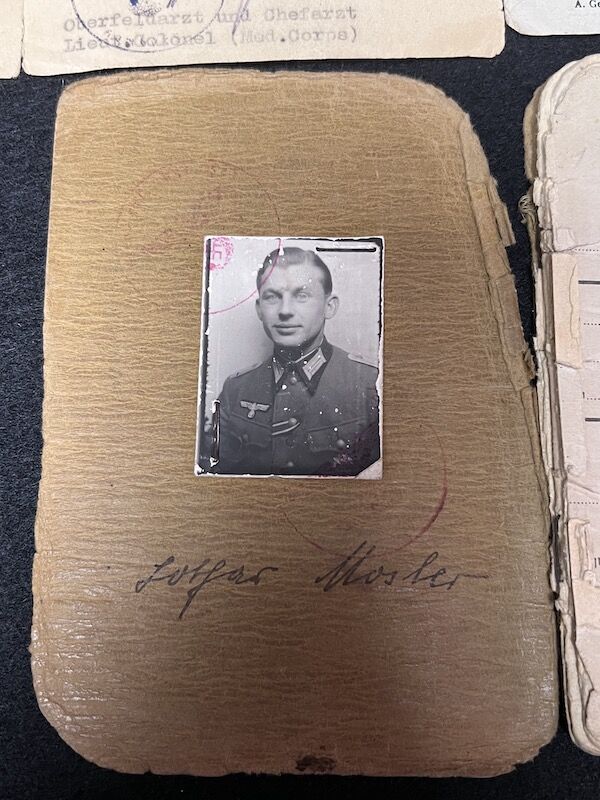
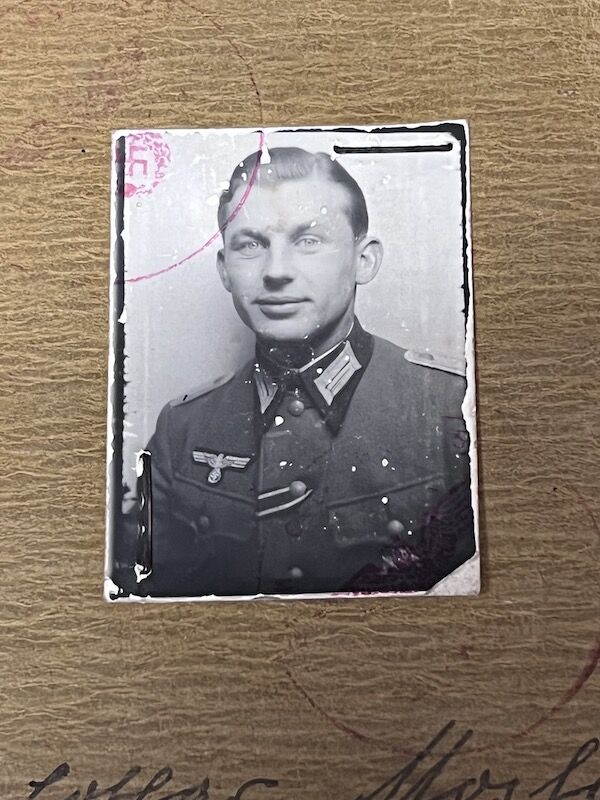
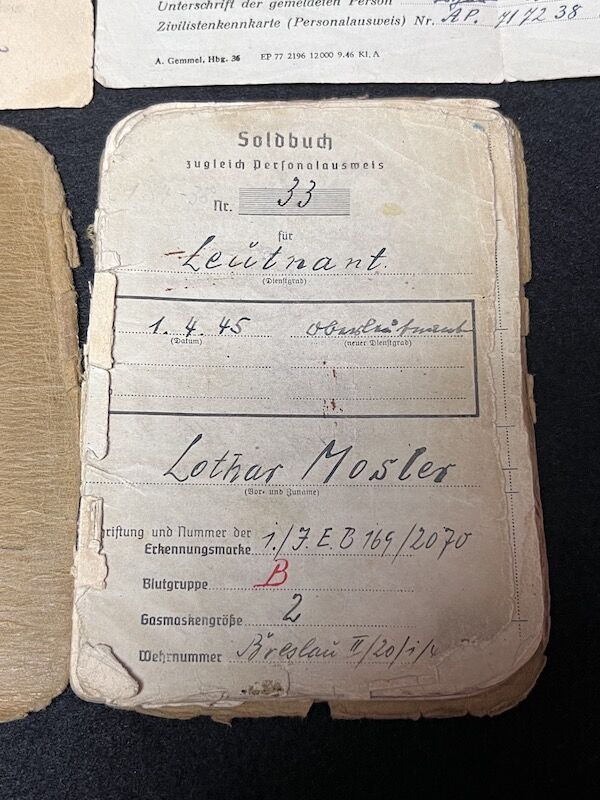
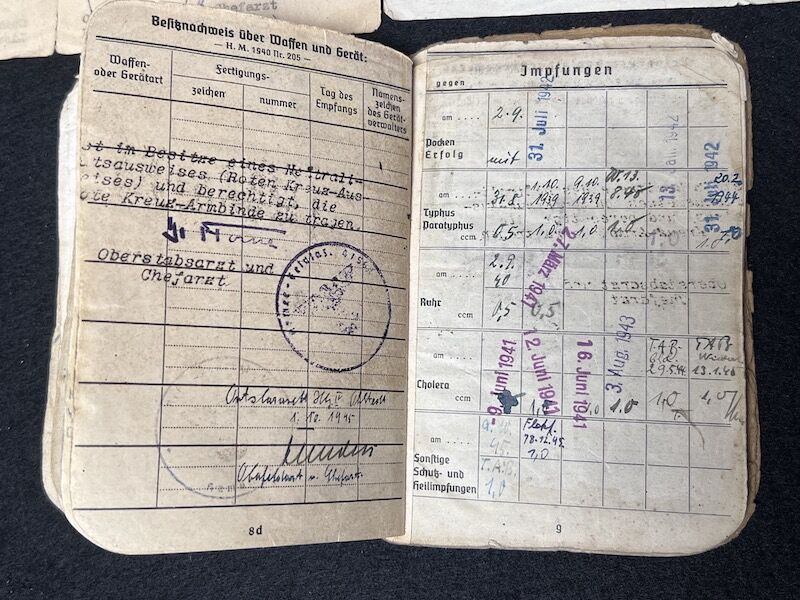
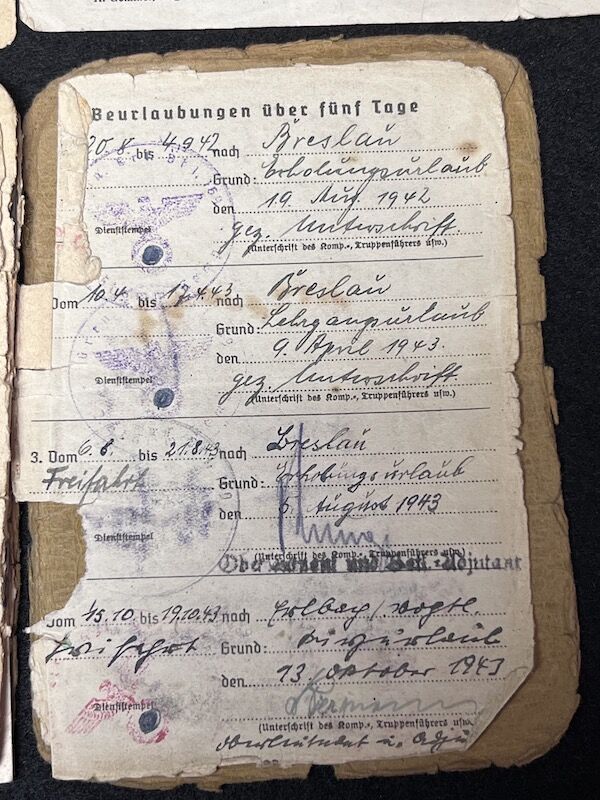
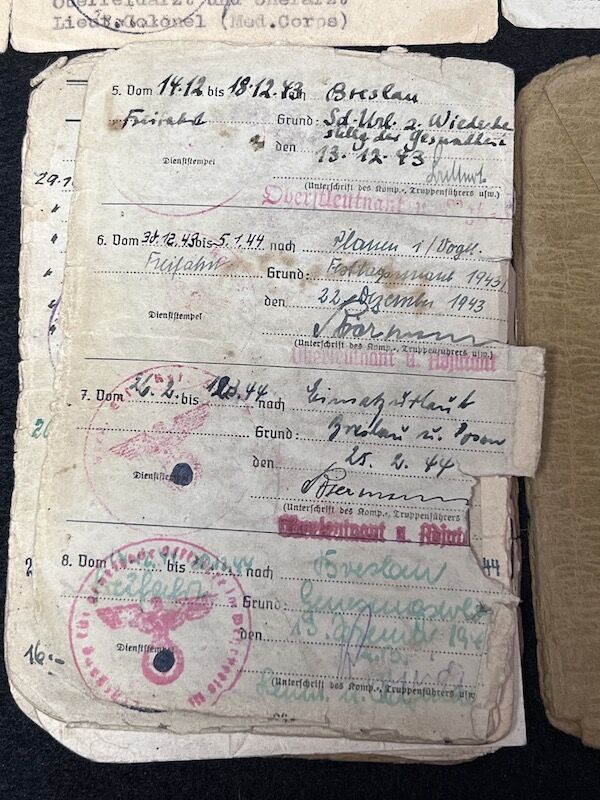
Original WWII German Wehrmacht Soldbuch – Oberleutnant Lothar Mosler – Iron Cross First Class – Panzer Pionier Batl 1233 – 233 Panzer Division – Wounded in Denmark 1945!!
£355.00
Description
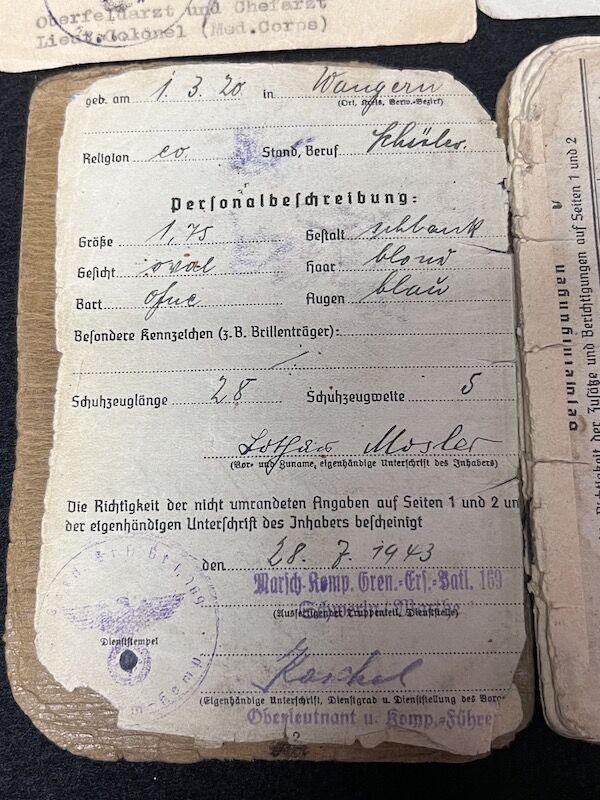
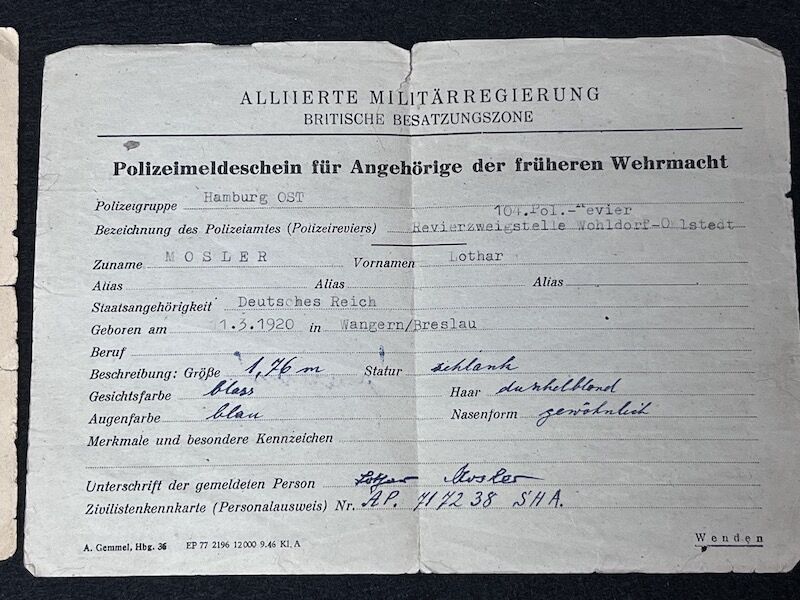
Mosler was from Wangern, Breslau. Born in 1920 he was enlisted in the German Army in July 1943.
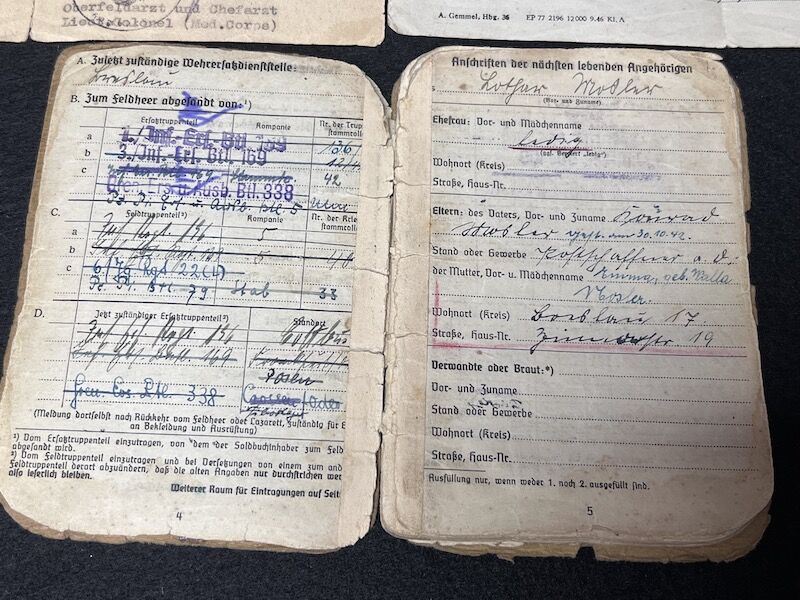
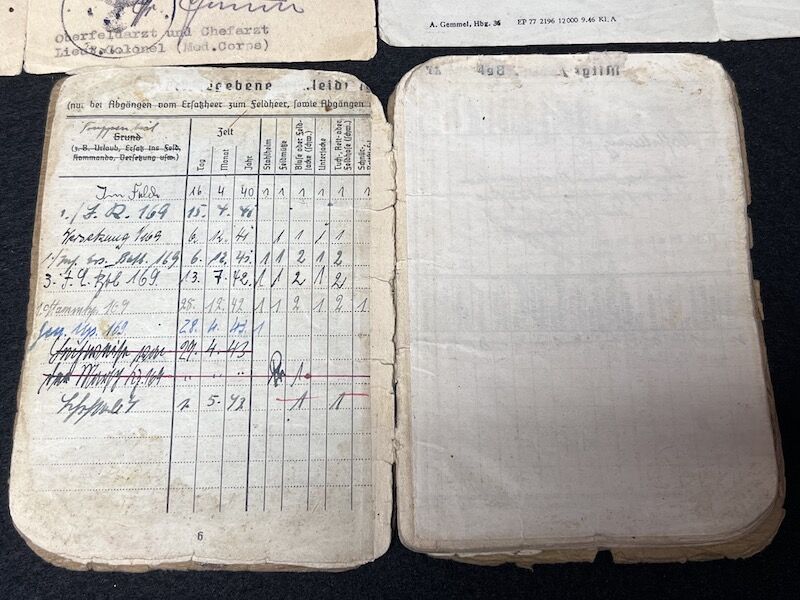
He served with:
Infanterie Regiment 196 – 68 Infantry Division
The 68th Infantry Division was formed on August 26, 1939, as a second-wave division by the 3rd Infantry Commander in Guben. The division was ready for action at the start of the Polish Campaign, and on September 1, 1939, it became the army reserve of the 4th Army. From the area north of Krakow, the division advanced via Sandomierz to Janow. After the conclusion of the Polish Campaign, the division served as an occupation force in Poland until November 1939 and was then transferred to the 16th Army on the Moselle River north of Trier. At the beginning of the Western Campaign, the division was the army reserve of the 16th Army and only participated in the second phase of the campaign, the Battle of France. During this time, it marched from south of Sedan to Epinal. As early as July 1940, the division was transferred to eastern Poland for border security.
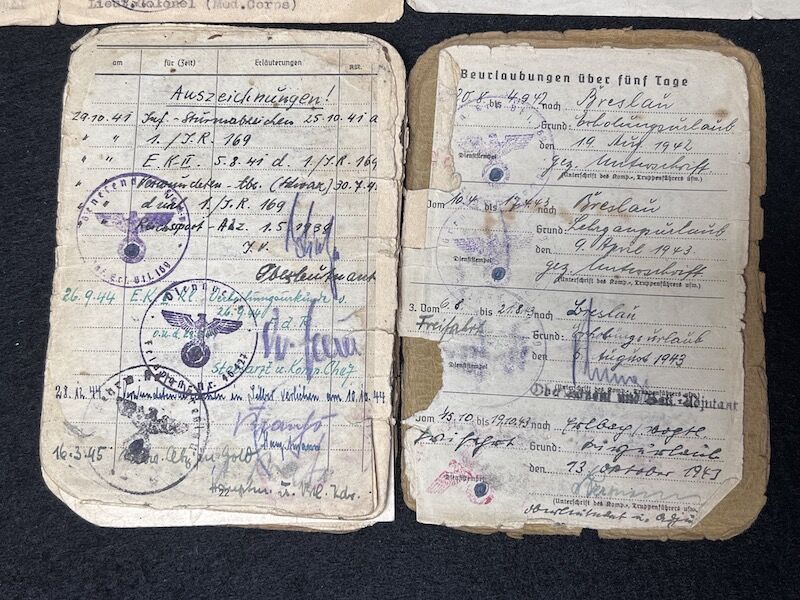
Infanterie Regiment 169 – 340 Infantry Division
In 1941 – 1943
1941 – Transfer to the Eastern Front
In August 1941, the division was transferred to Army Group Center during Operation Barbarossa. It was subordinated to 9th Army and participated in the advance toward Smolensk and later in operations aimed at Moscow. Through the autumn and early winter, the division was engaged in heavy fighting along the central sector of the front, including defensive actions during the Soviet winter counteroffensive of 1941–42. The severe winter conditions, supply shortages, and sustained combat led to significant casualties.
1942 – Defensive Warfare in the Rzhev Sector
Throughout 1942, the 340th Infantry Division remained in the central sector of the Eastern Front, primarily in the Rzhev–Vyazma salient, an area of intense and continuous combat. The division fought in defensive operations against repeated Soviet offensives intended to eliminate the German salient west of Moscow. Conditions were harsh, marked by attritional trench warfare, artillery duels, and local counterattacks. Losses remained heavy, and the division required periodic replenishment.
1943 – Retreat and Destruction
In early 1943, following the German withdrawal from the Rzhev salient (Operation Büffel), the division retreated westward with the rest of 9th Army. It subsequently became engaged in the defensive battles that followed the Soviet offensives after the Battle of Kursk in the summer of 1943.
During the Soviet Operation Suvorov (the Smolensk Offensive) in August–September 1943, the 340th Infantry Division was heavily engaged and suffered catastrophic losses in the fighting east of Smolensk. The division was effectively destroyed during these operations and was officially dissolved in November 1943, with surviving elements absorbed into other formations.
Jäger Regiment 22 (L) – 11 Luftlande Division
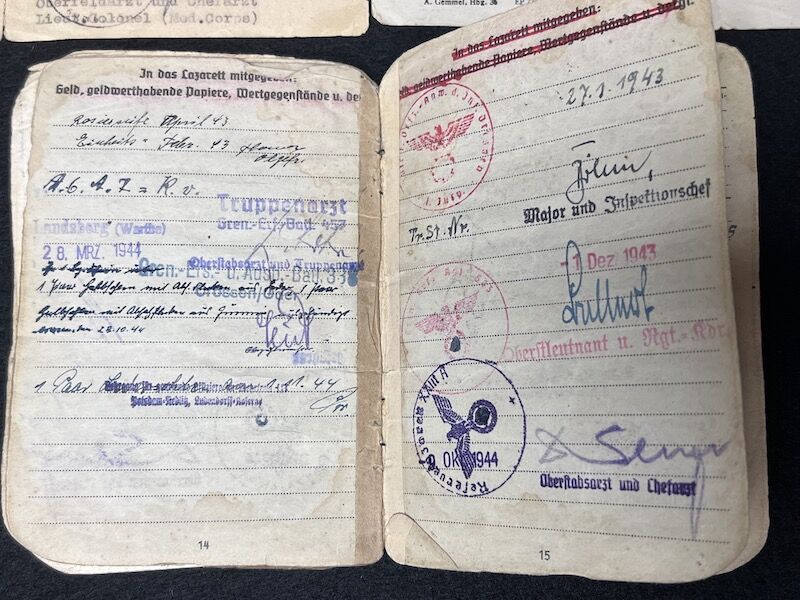
1944 until injury (31a) September 1944 – likely fighting Partisans.
Security in Creta – During the evacuation of Greece in the autumn of 1944, the regiment had to endure heavy fighting in its retreat through Serbia, across the Drava River, and into Croatia.
Panzer Pionier Batl 79 – 4th Panzer Division
It seems he must have been a very short time with this unit in Latvia (Kurland) in very late 1944. Because by March/April 1945 he was in Denmark with the next unit.
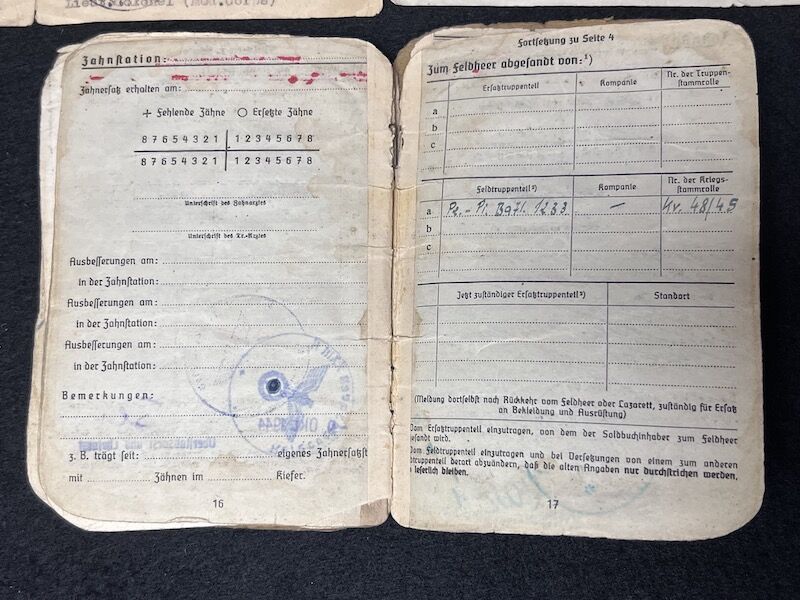
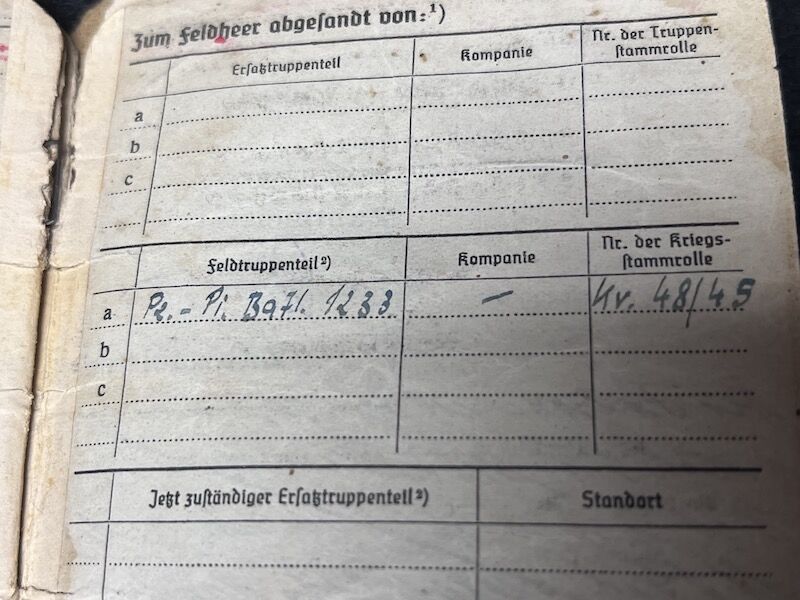
Panzer Pionier Batl 1233 – 233 Panzer Division
Based in Denmark, it would seem that he was wounded in Denmark!!
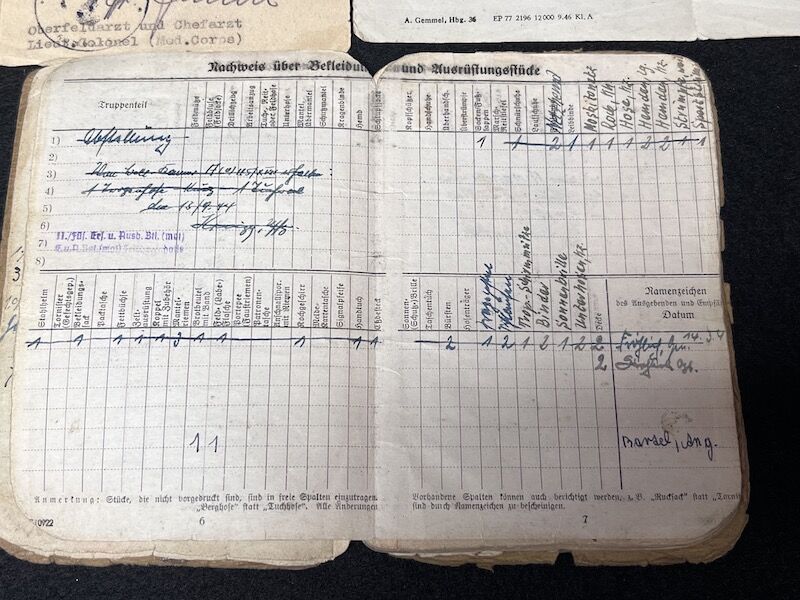
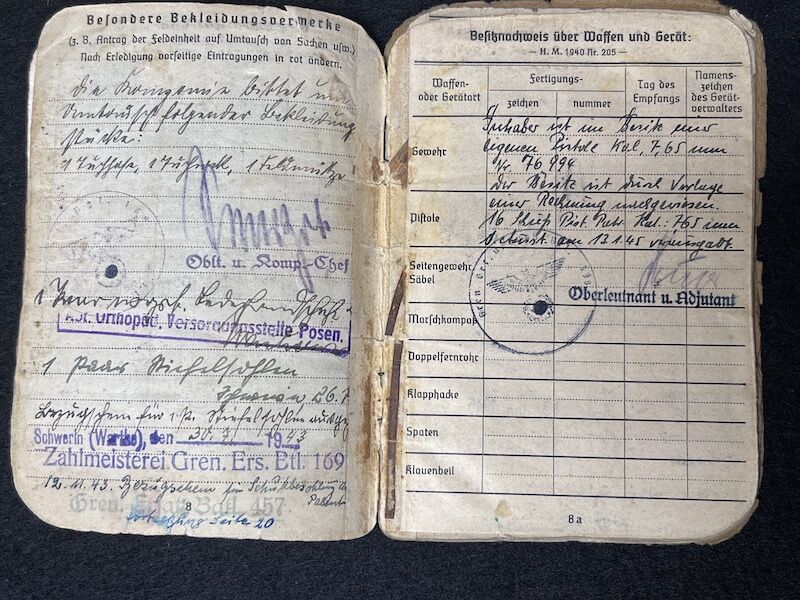
Equipment Issued – Tropical Cap, Mosquito Net, Mosquito Overall
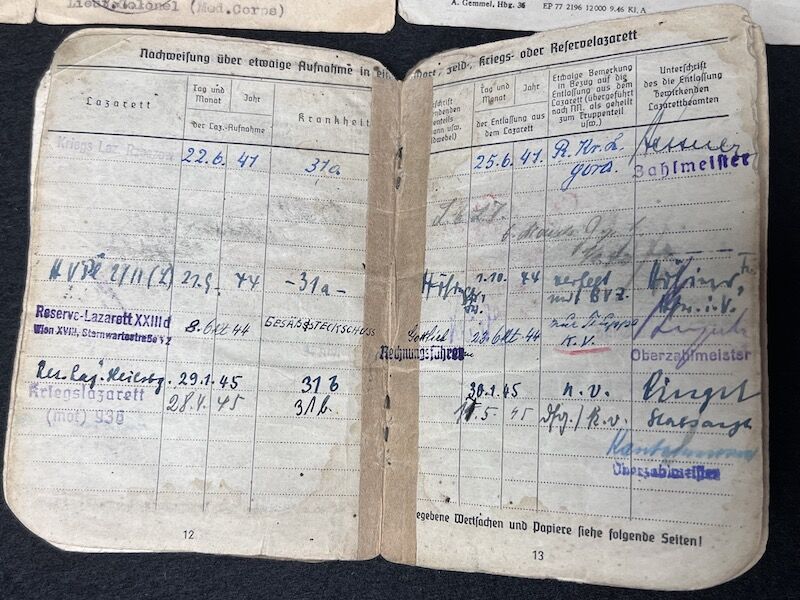
Injuries
- 22.6.1941 – 31a – Enemy Bullet – Russian Front
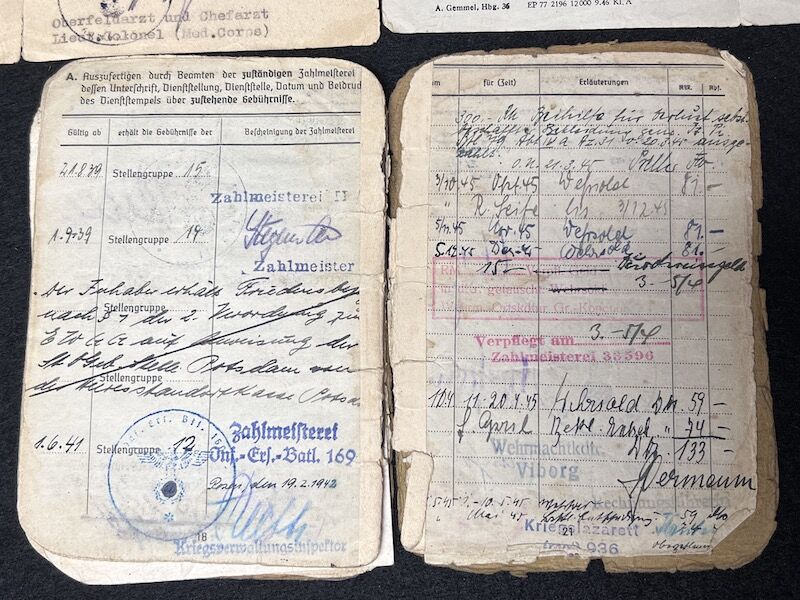
- 11.9.1944 – 31a – Enemy Bullet stuck in buttocks – released in October 1944. – Greece
- 29.1.1945 – 31b – Shrapnel – Kurland Latvia
- 28.4.1945 – 31b – Shrapnel
Medals
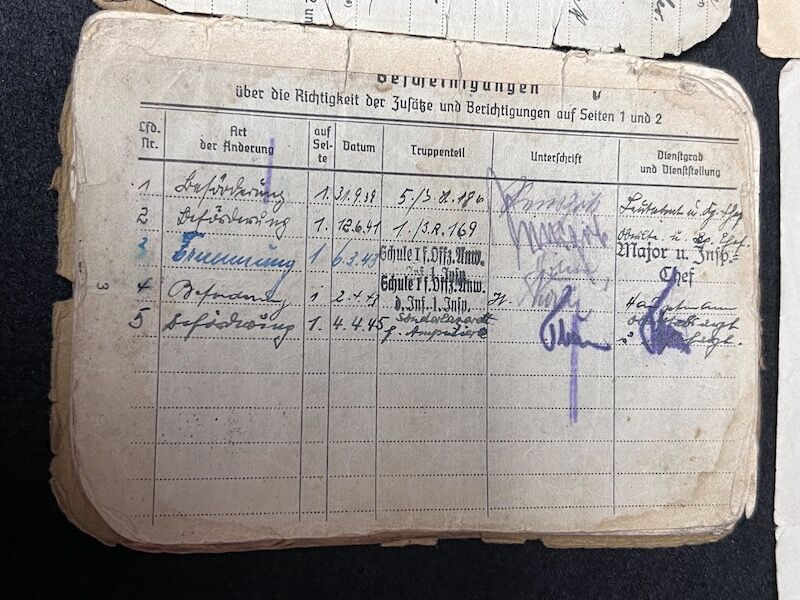
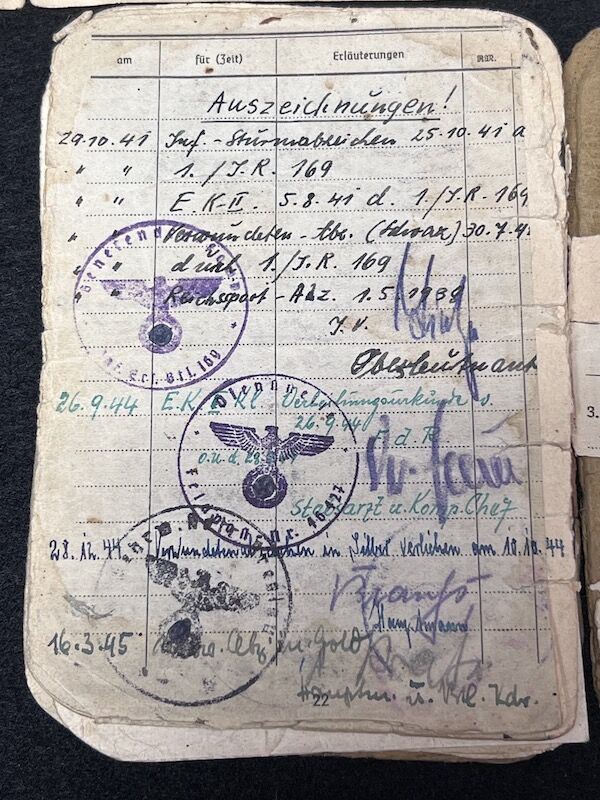
- Infantry Assault Badge – 25.10.41
- Iron Cross Second Class – 5.8.1941
- Wounds Badge in Black – 30.7.1944
- Reichsports Badge – 1938
- Iron Cross First Class – 26.9.1944
- Wounds Badge in Silver – 10.10.1944 – Greece
- Wounds Badge in Gold – 16.3.1945
Final notes
It is unclear how the end of 1944 and the first part of 1945 played out for him, although it is highly likely that he was wounded in Denmark in April 1945 in clashes with Danish Resistance.
On 28 April 1945, Denmark was in a state of high tension, Resistance sabotage operations were ongoing. Small-scale armed clashes occurred in some areas. No major nationwide battle or coordinated uprising took place that day he was injured. Full liberation fighting began only after Germany’s surrender in early May.
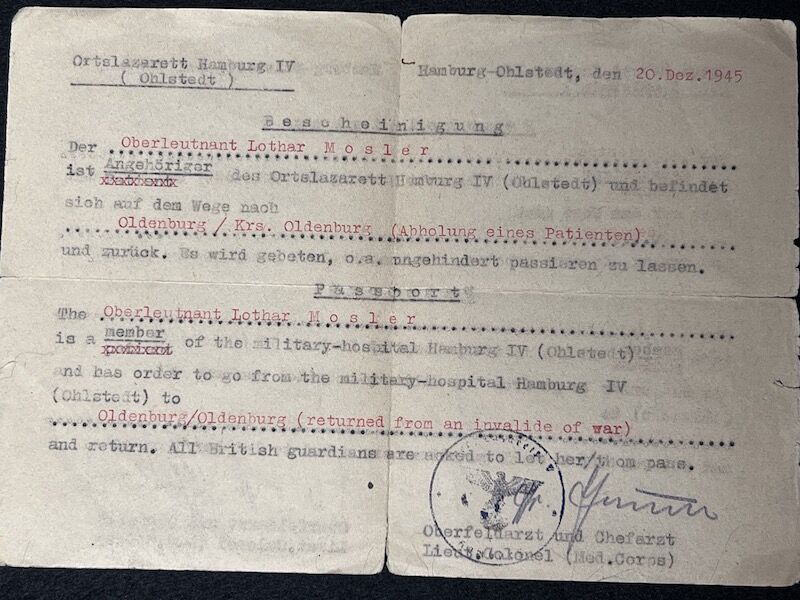
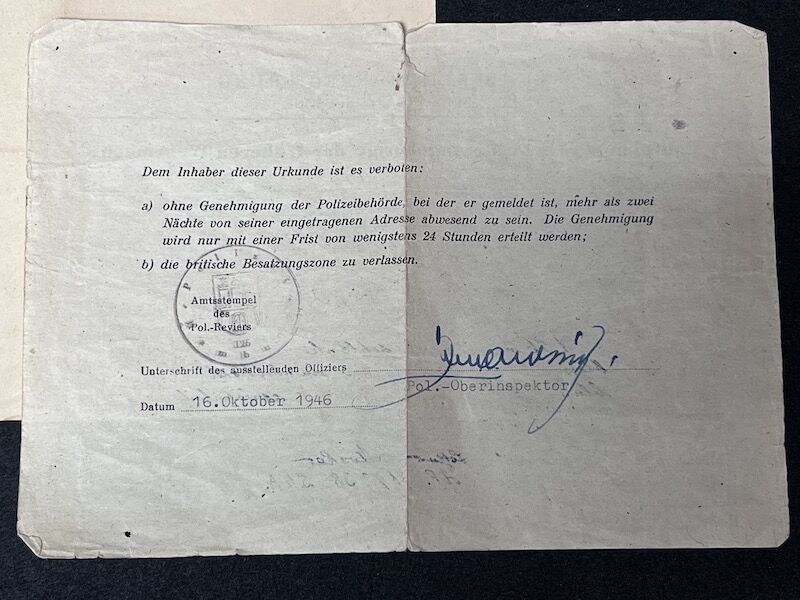
In December 1945, he was working in the Medical Hospital of the Wehrmacht under British watch in Hamburg.
Related products
- Sale!

WWII German Knights Cross Holder – Karl-Conrad Mecke – Raid on St Nazaire – 22 Marine Flak Regiment
Original price was: £168.00.£124.00Current price is: £124.00. -

-

-


