
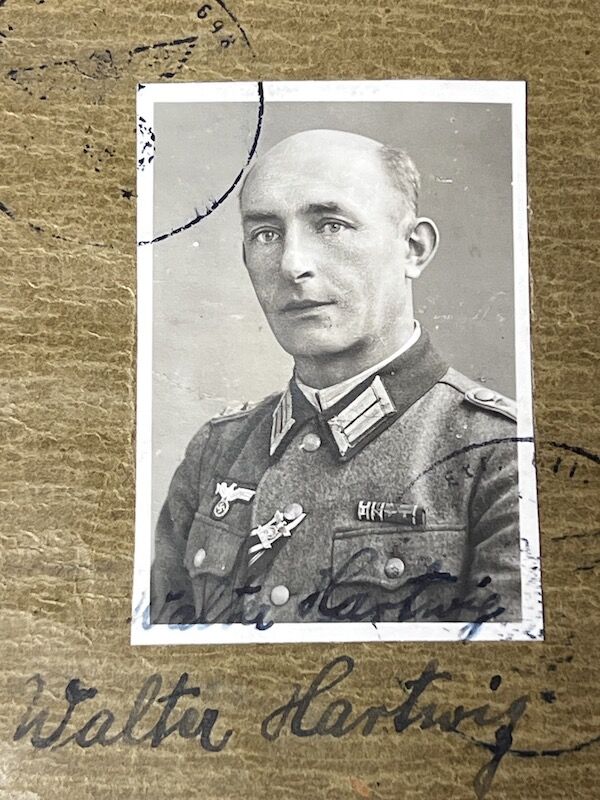
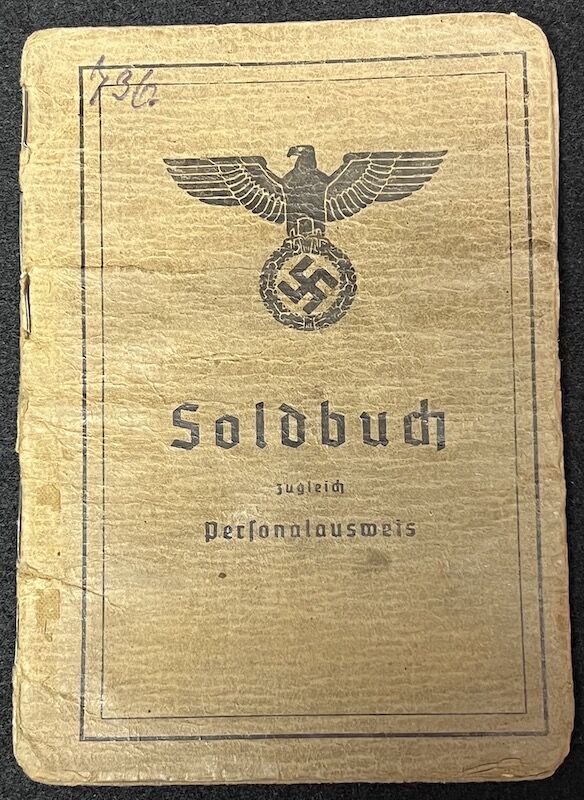
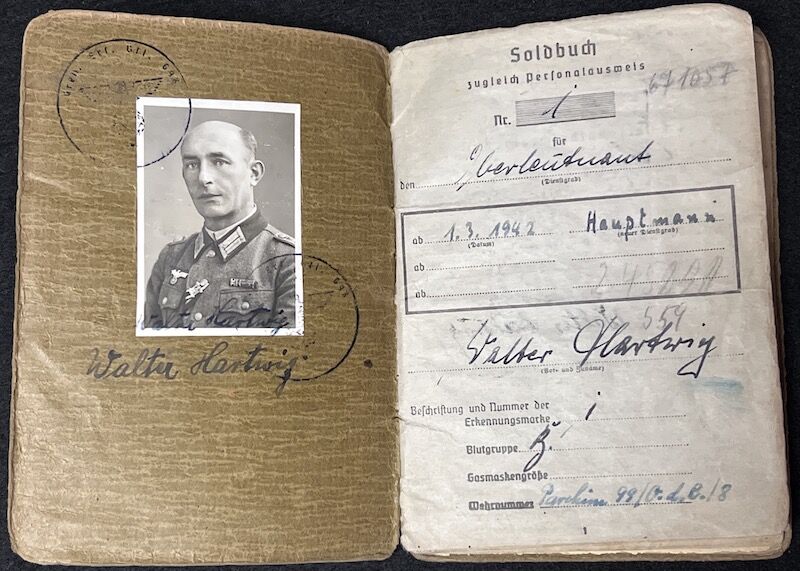
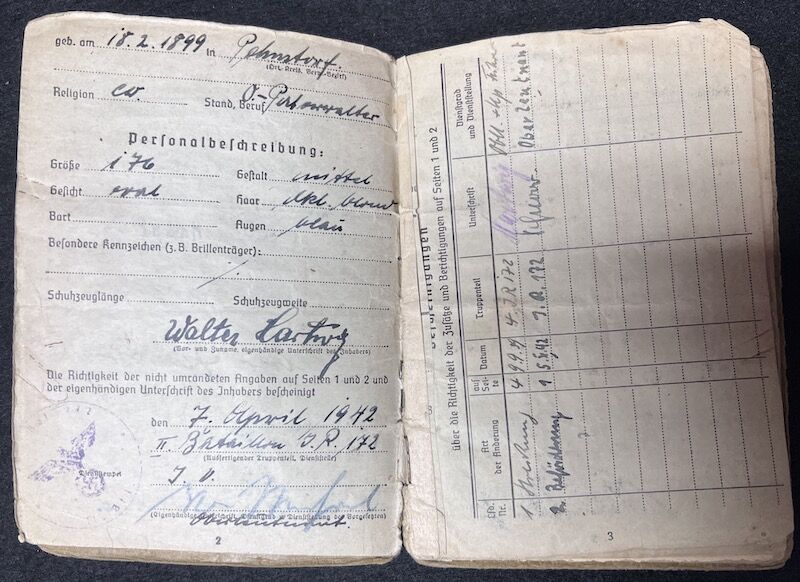
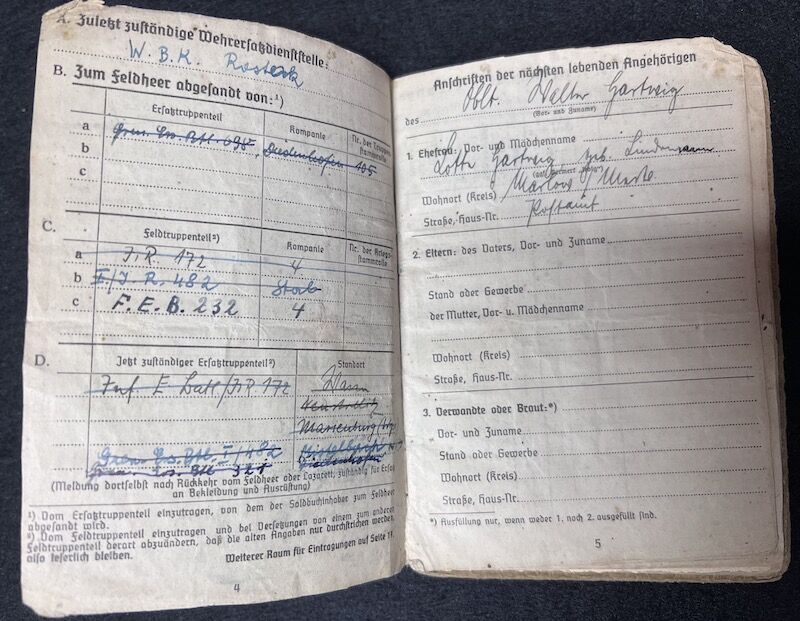
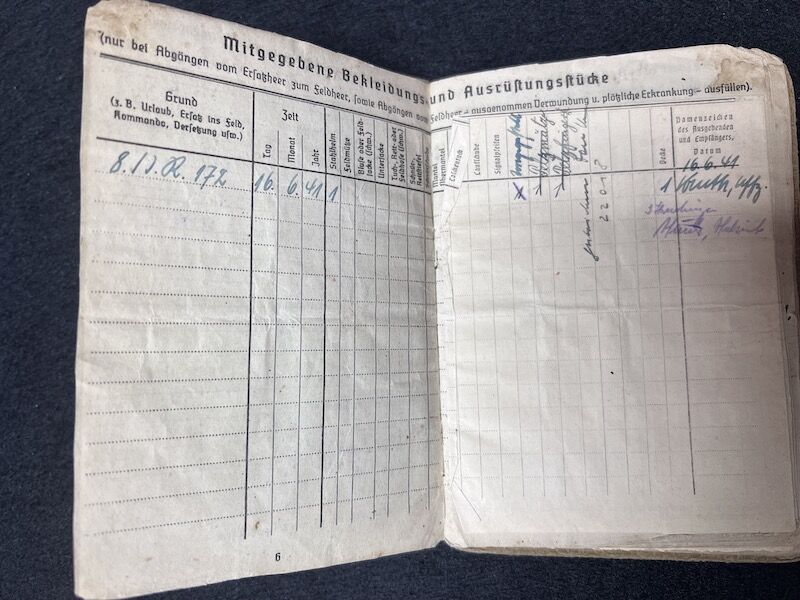
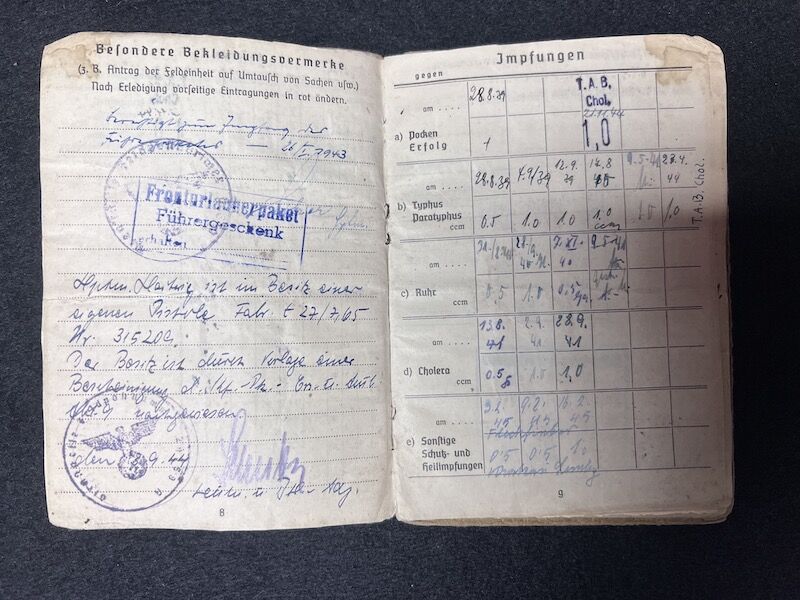
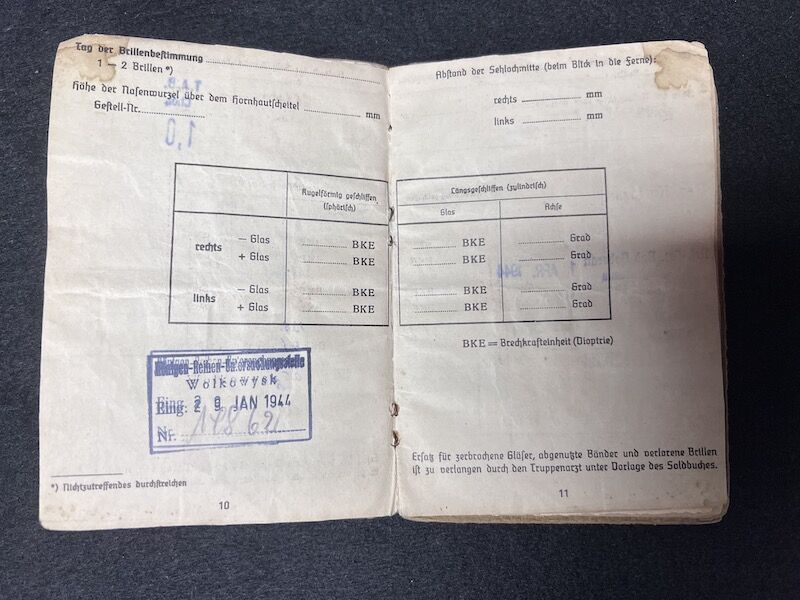
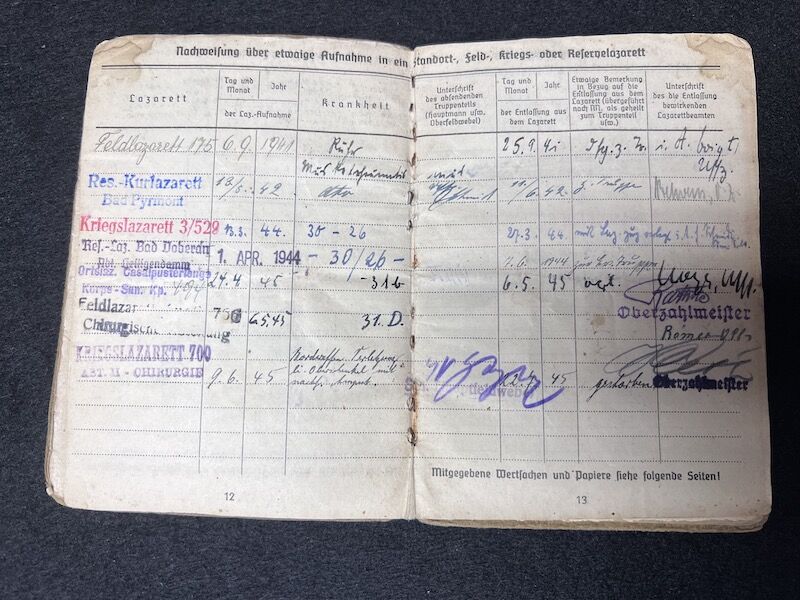
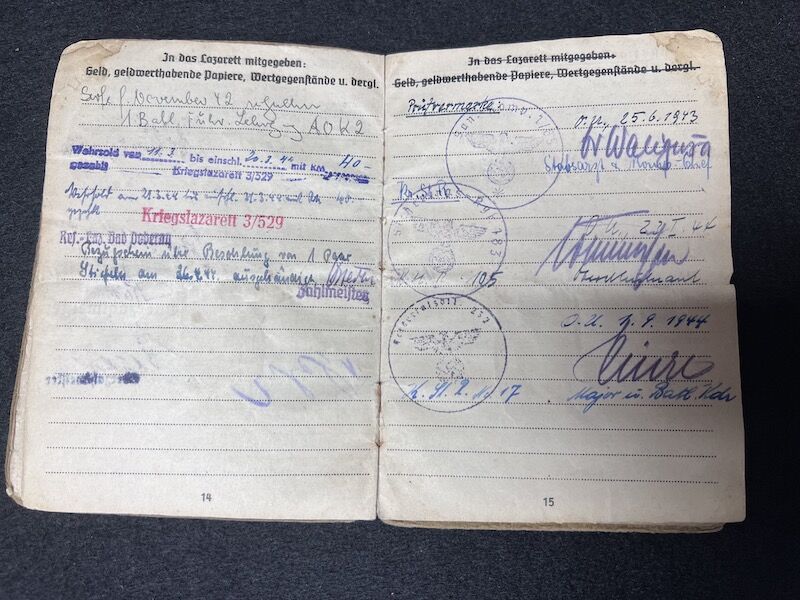
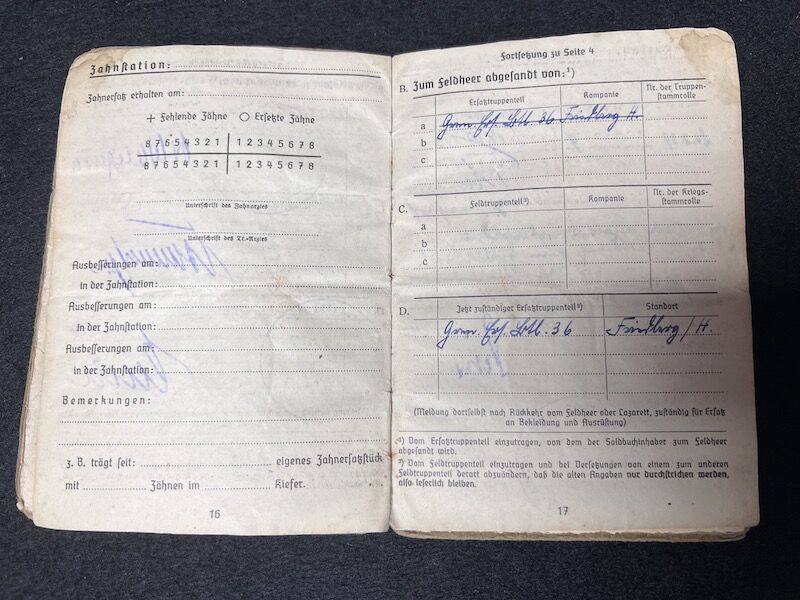
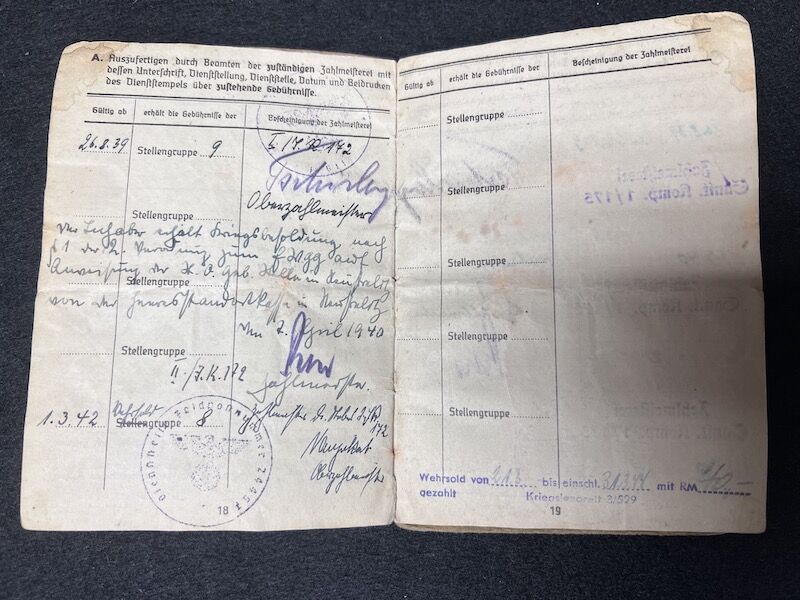
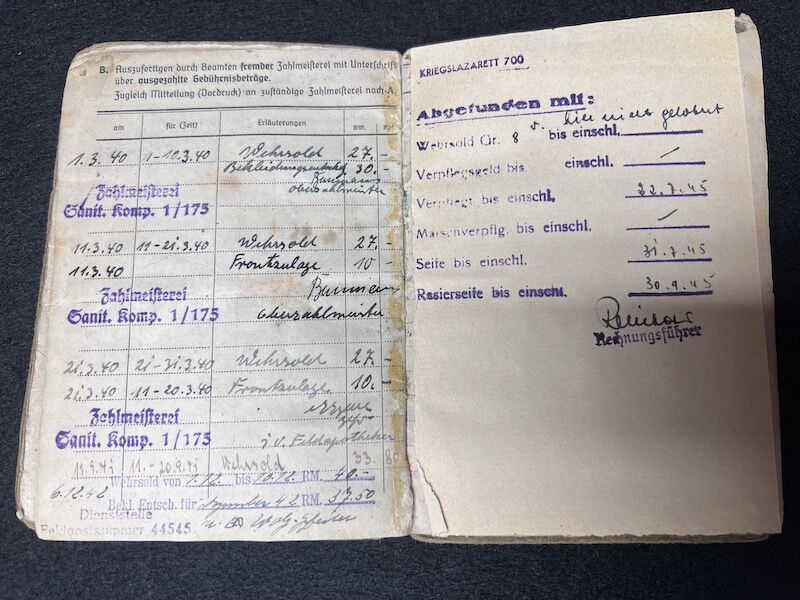
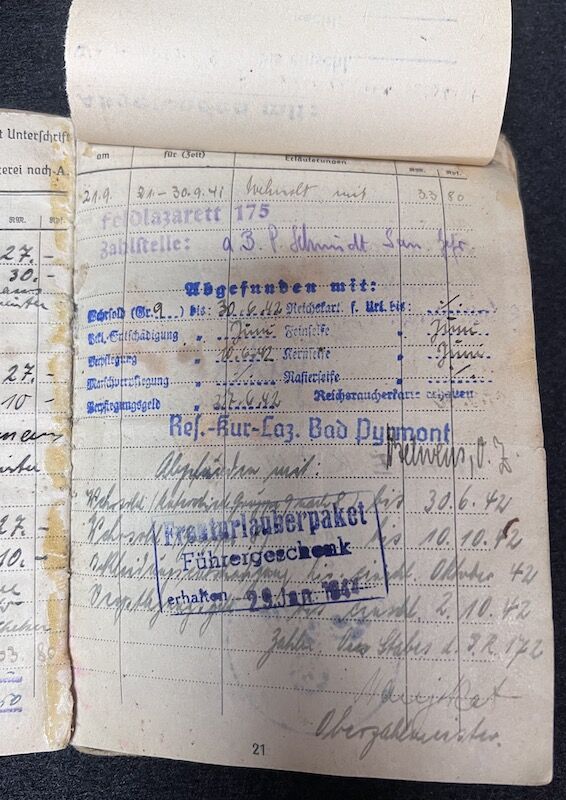
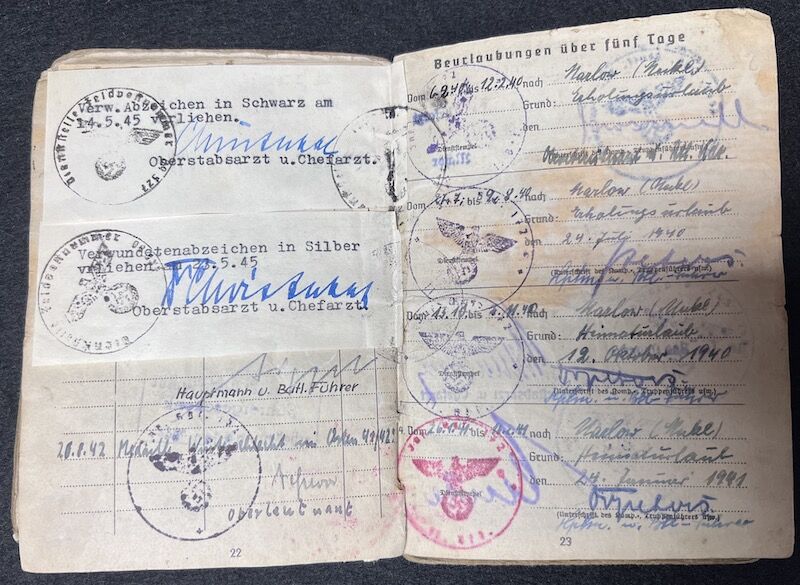
Original WWII German Wehrmacht Soldbuch – Hauptmann Walter Hartwig – 232 Infanterie Division – Gothic Line Italy 1944/45 –
Description
Hartwig was born in 1899.
A seasoned veteran of WW1.
Serving with:
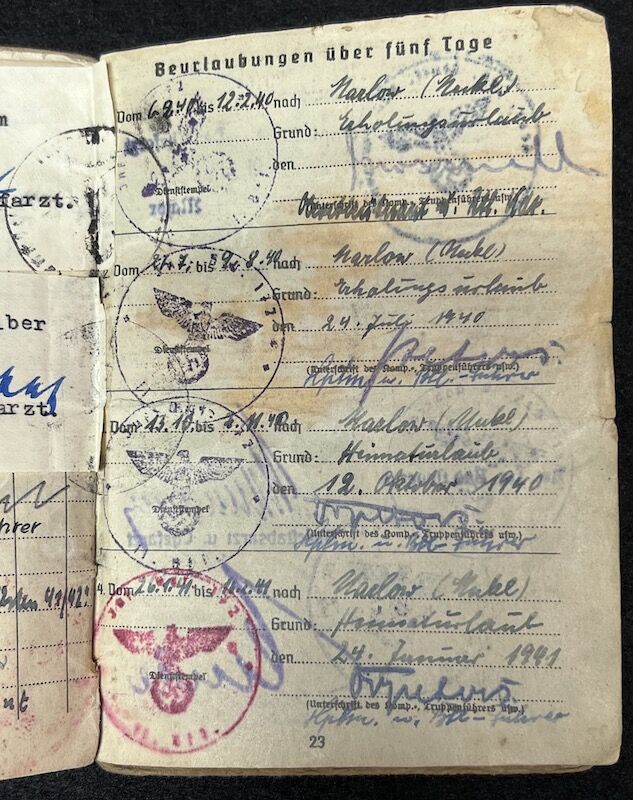
Infanterie Regiment 172 – 75. Infanterie-Division
From 1939 till 1942
The 75th Infantry Division was formed on August 26, 1939, as a second-wave division from the 12th Infantry Division. Following its formation, the division became the army reserve of the 1st Army and in October 1939 was transferred to the Saar-Palatinate region for border security, later moving to the Saarbrücken area. The division remained there during the first phase of the Western Campaign. During the 1st Army’s attack against the Maginot Line in June 1940, the division broke through the fortifications and advanced into the area south of Baccarat and northeast of Épinal. After the French surrender, the division was transferred to Poland in July 1940. On October 8, 1940, one-third of the division (Staff/222, I./172, I./202, I./222) was transferred to the 302nd Infantry Division, and these units were replaced. From June 22, 1941, the division participated in the invasion of Russia. From the area west of Sokal, the division crossed the Bug River, fought its way through Ukraine via Dubno and the Teterev River to the combat zone around Kyiv. After the Battle of Kyiv, the division turned towards the Donets River in the area south of Belgorod. The division fought in this area until June 1942. Subsequently, the division participated in the German offensive to the Volga River. From the area around Stari Oskol, the division advanced to the Don River near Korotoyask and entrenched itself there. From September 1942, the division participated in the positional and defensive battles around Voronezh, which lasted until February 1943.
Infanterie Regiment 482 – 262. Infanterie-Division
From 1942 – 1943
During the German attack on Moscow, the division advanced into the area between Yelets and Yefremov. After the start of the Russian counter-offensive before Moscow, the division had to retreat to the Orel area. It established its new position between Novosil and Orel, where it remained until July 1943. After the German offensive at Kursk, Operation Citadel, was called off, the division became army reserve for the 9th Army and, from August 1943, was deployed to defend against the Russian breakthrough between Orel and Bryansk. The division suffered extremely heavy losses, so that its strength dwindled to that of a battle group. Only remnants of the division managed to withdraw as far as the Orsha area. On November 2, 1943, the division was disbanded and formed Division Group 262.
Feld Ersatz Btl 232 – 232 Infanterie Division
1944 – End
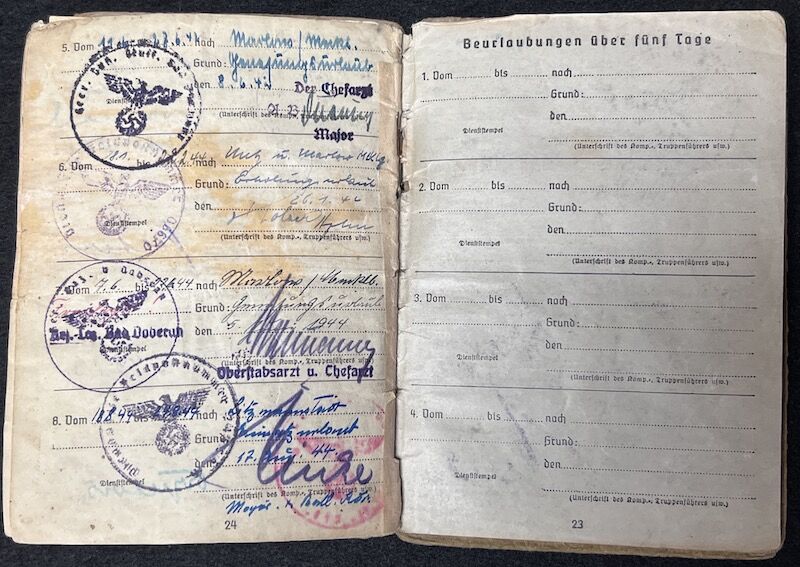
The 232. Infanterie-Division was formed in June 1944 in Wehrkreis V (Stuttgart area) and was sent to northern Italy shortly thereafter. It was assigned to Army Group C, which was responsible for defending against the Allied advance up the Italian peninsula. In late summer and autumn 1944, the division took part in defensive operations along the Gothic Line (Linea Gotica) — Germany’s major fortified defensive line across the northern Apennines. The Gothic Line became the focal point of heavy fighting beginning in August 1944 when Allied forces (primarily the British Eighth Army on the Adriatic side and the U.S. Fifth Army on the western side) launched major offensives to break into the Po Valley. The 232nd operated in the central Apennine sector, engaged in defensive mountain warfare characterized by: Static defensive positions, Counterattacks to regain lost ground, Intense artillery exchanges, Difficult terrain and supply conditions.
The division faced sustained pressure during the autumn Allied offensives, including attacks aimed at breaking through toward Bologna. Although the Allies achieved local penetrations, German forces—including the 232nd—managed to delay a full breakthrough before winter weather halted large-scale operations. By the end of 1944, the division had suffered attrition but remained in defensive positions in northern Italy, continuing to hold sectors of the Gothic Line as the front stabilized for the winter.
The 232nd Infantry Division surrendered to American forces in the area between Brescia and Milan.
He was wounded in April oof 1945, 31b – shrapnel.
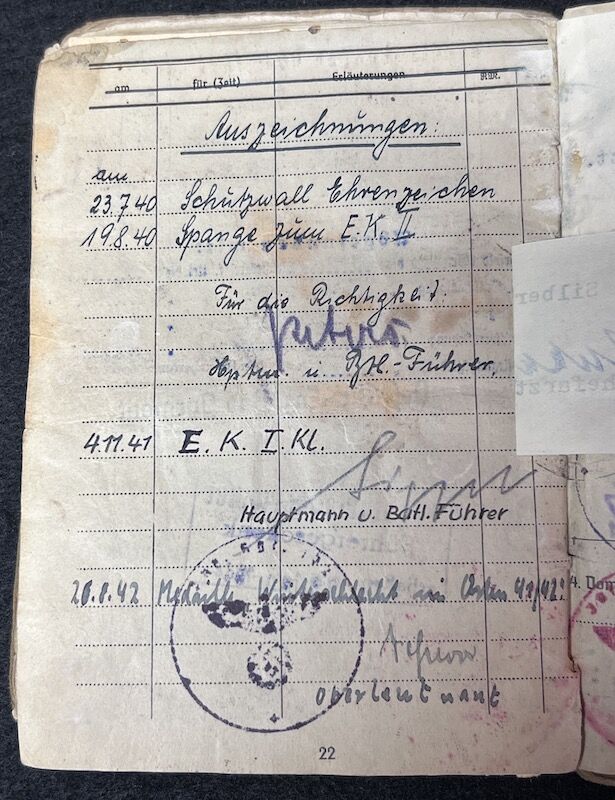
Medals
- Westwall Medal – 1940
- Clasp for the Iron Cross Second Class – 8.1940
- Iron Cross First Class – 11.1941
- Eastern Front Medal – 8.1942
- Wounds Badge in Black – 14.5.1945
- Wounds Badge in Silver – 23.5.1945


